By eBird standards, the spot in Greenwood Village where the High Line Canal Trail and Little Dry Creek Trail meet are lukewarm birding “hotspots”. With no pond, reservoir or major river, the local list of waterbirds is short. Mallards are common, but nearly every other duck or shorebird would qualify as a “good” bird if spotted here. All told, birders have reported a modest 109 species of birds along the High Line Canal. It ranks only 64th on Arapahoe County’s list of hotspots. With just 70 species on eBird, Little Dry Creek barely cracks Arapahoe’s top 100.
But viewed from the perspective of a birder obsessed with insectivores, this modest stretch of trail is a miracle. Where the Little Dry Creek and High Line Canal trails meet, so too do their riparian corridors. The mostly dry canal offers hollowed cottonwoods, wild plums, and chokecherries. The wetter Little Dry Creek and its lusher mix of willows, still-thriving cottonwoods, and other small trees.
This confluence of streams and habitats is a meeting place for birds, too — flycatchers from East and West. Over the past decade, something remarkable has happened there: Western Flycatchers (formerly Cordilleran until 2023) have descended from the mountains, and Eastern Phoebes have moved in (perhaps new birds ranging farther west or drifters from established nesting populations along the South Platte River).
The Birds Who Changed My Neighborhood
I began birding these two trails regularly in 2018, too recently to pinpoint when these changes began. But that year, the thrilling appearance of a nesting pair of Cordies guaranteed I would bird both trails regularly from then on. My first encounter, on May 24, was with the male. He was singing just steps away from the canal, near a small bridge over Little Dry. It was my first county sighting of the species, and I assumed he was just stopping by during migration.
But he persisted, and I found him again several times over the next week or so around the bridge. Most mornings he sang, and so he moved up the breeding code ladder in my eBird checklists from “Singing Bird” to “Singing Bird Present 7+ Days.” Two weeks after that first sighting came fresh excitement: On June 7, I spotted a second Cordilleran! Soon the male’s singing slowed and nest building appeared to be the pair’s preoccupation.

By then I was paying regular visits to the bridge. I recruited a few other High Line Canal birders I knew — Mary Fran O’Connor, Cynthia Madsen, Denise Reznicek, and the late Joe Roller — to do the same. For the next month, we kept all eyes peeled to document any nesting behavior. We never did locate the pair’s nest, which the pair likely hid underneath the bridge. But we did establish that nesting occurred. Unfortunately, our documentation story didn’t conclude with the triumphant ending we had hoped for. Here’s how I reported it on the COBirds email list-serv on July 7, 2018:
“Today, when I arrived at the nesting location, I was thrilled to hear some begging calls from near the bridge. The pair continually visited the location with food. And then, from some movement near the apparent parents, a fledgling emerged: cowbird.”
Was it a one-off nesting attempt, or a sign of things to come? The next year, I anxiously awaited the birds’ possible return. And back they came — as they have every year since! How things have changed for this species. Today’s Western Flycatcher is increasingly common along these stretches of the High Line Canal and Little Dry Creek trails. Over the past two summers, I’ve occasionally biked a 5-6 mile stretch of the two trails. On those rides, I’ve found Westerns in three or four locations. Usually, they’re near bridges or where the Little Dry Creek veers toward the High Line.
For more of my bird photography and writing, subscribe to my monthly newsletter. I’ll share updates about the publication of my new book on Whip-poor-wills and reports from the field.
The Arrival of Eastern Phoebes
Thanks to these flycatchers, I’ve taken much greater interest in two otherwise modest riparian corridors. I bird them regularly, and thanks to their being walkable from an RTD bus line, I’ve also brought along students in my urban wildlife course at the University of Denver. In fact, it was during one of those student field trips in 2024 that my birding expectations there turned topsy turvy again.
On March 28 of that year, on a class visit to the canal and High Line Canal Conservancy office, we found a single Eastern Phoebe flycatching around the bridge that Westerns nested at. The students all got a brief sighting, enjoying the phoebe’s tail-wagging behavior.

As I did years before with the Cordy/Western, I made several return trips to the trail in search of that phoebe. Often, I’d find one singing his familiar song. I hadn’t heard Eastern Phoebes much around Colorado, but in New York state where I grew up, they’re so common that every house seems to have its own. In mid-April 2024, the male’s singing was rewarded: A second Eastern Phoebe arrived. Later, even a third one showed up, but two of the phoebes chased off the other to maintain nesting equilibrium.
The birds returned in 2025 and 2026, and presumably they’re nesting, though I haven’t figured out where. Much of the likely nesting area is inaccessible to birders — either fenced off by Denver Water or along a stretch of Little Dry Creek that snakes away through private property. Too bad for us: I’d love not just to document the pair’s nesting behavior, but also to see the nest (from an appropriate distance) and record what it’s made of. As I wrote on COBirds:
Eastern Phoebes are known for incorporating mosses into their nests. This is what Birds of the World says: “The green moss is an invariable component in nest construction and its presence is diagnostic; late season nests during dry periods may have less moss.” Mosses are scarcer in this area, but certainly not absent. There are nice collections of mosses along the creek in spots. Over-irrigated lawns also often have them, usually at their edges. These (the over-irrigated lawns) too, are present in the area. As someone with a budding interest in bryophytes, I hope to observe and possibly photograph this pair collecting mosses
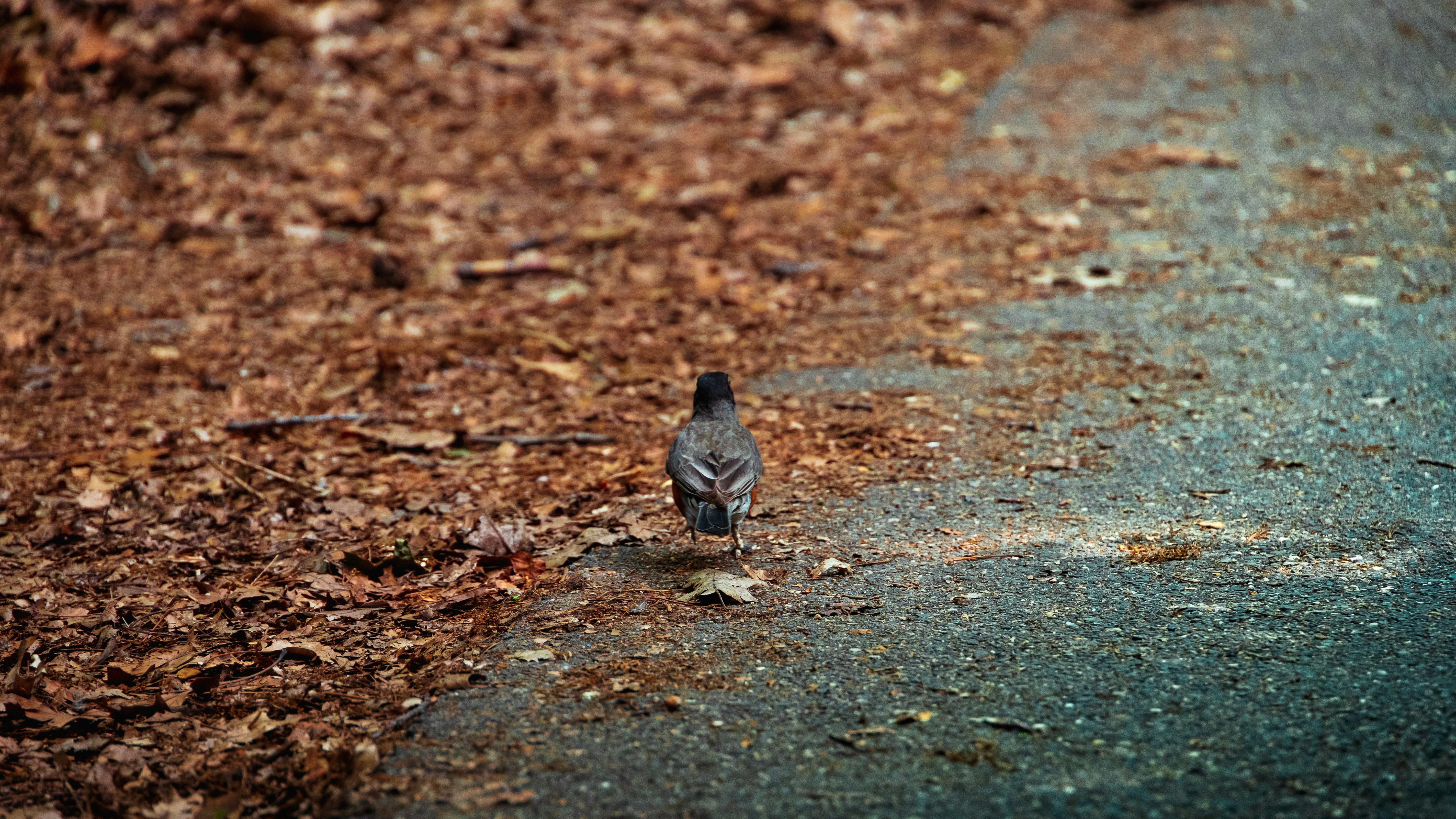
This year, I lucked into photographing one of the phoebes with nesting material, though what it was carrying was unclear. Collected from a muddy part of the canal, it looked like a mucky mix of fibrous materials.

With birds, as with us: The only constant is change
The presence of these two species is more evidence of rapid change underway in the breeding bird communities of Denver’s southern suburbs. In recent decades, several other species — Bushtit, Chipping Sparrow and Dark-eyed Junco, most notably — have become more common breeders in metro Denver. Their presence enhances the natural soundscape of the city and its suburbs. Even the modest trails around my home sound markedly different than when I moved into the area a decade ago, thanks to the eastward drift of Western Flycatchers and the westward shift of Eastern Phoebes.
I can’t help wondering what might come next. As far as I know, Western Wood-Pewees don’t nest along these riparian corridors, though they’re fairly common in Arapahoe County. Perhaps they’ll be next to breed here? And what of the phoebes? Will they gradually spread like the Western Flycatchers did, becoming locally common here and there around Colorado? Or, hope against hope, might the progeny of the Black Phoebes that nested along the S. Platte River this spring continue the eastward drift of the species and, like the Western Flycatchers and Eastern Phoebes before them, find the Little Dry Creek adequate?
Only another year of return trips, then years of the same…to otherwise lukewarm hotspots!

Leave a Reply