
Denver Audubon holds its annual Christmas Bird Count in urban Denver on January 1. So the New Year begins early for many birders across the city who fan out across the city to count the birds, as if it’s the most urgent thing to accomplish in a year. (Isn’t it?)
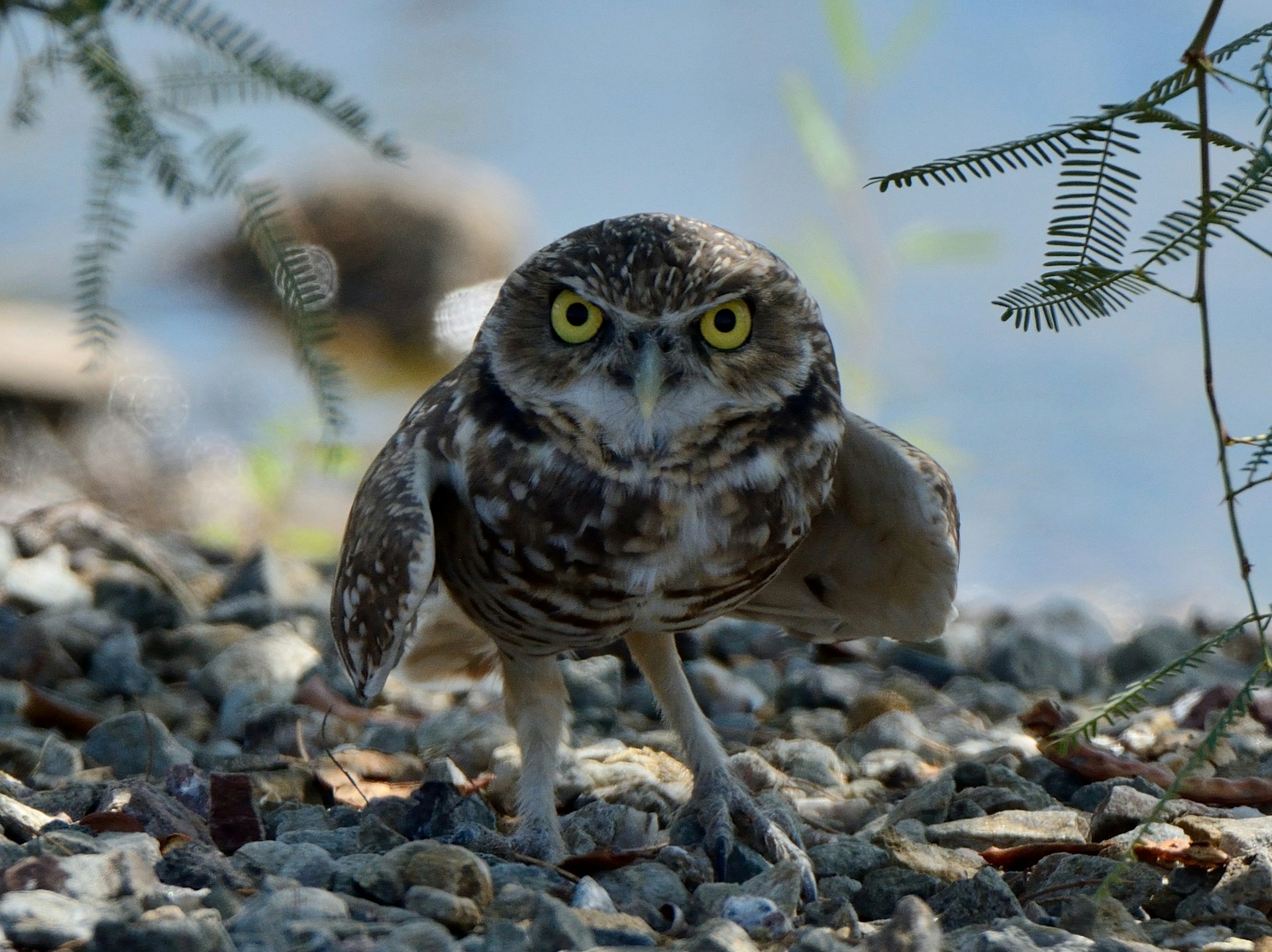
Mine 2025 began earlier than I intended. I woke at 3:30 AM for a 4:30 alarm for owling. Too cold, too early, so I dragged my feet until about 5, then headed to my count section — “Area 10,” south of east of Denver, to count calling Great-horned Owls (three!) and Eastern Screech-Owls (two!). Both owls are somewhat common along the High Line Canal Trail south of Denver, owing to the good habitat and food.
A very cold morning, though — cold enough to turn my breath ghostly in the light of my headlamp.

I left the owls around sunrise. With about 45 minutes to spare before the count officially began, I filled my time with espresso and parking lot birds. I was after House Sparrows, who’s numbers have precipitously declined over the last little while on Denver’s count. I encountered a single one behind a Whole Foods. Nearby, four Northern Flickers foraged clumsily in a creeper vine.
Birds, it seems, ignore creepers until after the frost mellows the berries. A few are still on the vine.
At 8:00, a small group of remarkable birders and I began birding the High Line Canal Trail in Cherry Hills Village. Almost immediately, three Hairy Woodpeckers established the specialness of the day. Hairy Woodpeckers are uncommon in the Denver metro area. I don’t remember ever seeing more than one, and the high count for the urban Denver CBC is only 6. These may have been the only Hairy Woodpeckers counted yesterday, which makes the appearance of three all the more surprising.
This was an early theme: multiples of relatively uncommon species. Three Brown Creepers along the trail. Two White-throated Sparrows. A mere one White-throated is the Denver CBC high until this year. With our two were two more at Denver Botanic Gardens and another at Westerly Creek. So the count should tally at least five this year.

In keeping with multiples, our group found two Greater White-fronted Geese among an absolutely massive flock of Cackling Geese at a nearby pond. The speed at which a few of us — myself excluded — found the White-fronted Geese still astounds me. I find looking at endless, bobbing black-and-white faces of white-cheeked geese in shimmering water disorienting. Hard enough to focus on a single Cackling goose, let alone find the two orange bills hidden in the gaggle of 2,500 or so birds.
Cedar Waxwings and Spotted Towhees were also numerous yesterday. The former were visiting junipers and buckthorn. The latter were doing what they do best, maneuvering deep thickets and scratching away at the ground. This is the typical view of Spotted Towhees. (Yes, there are two there.)

We counted thirteen Spotted Towhees along a single mile and a half or two stretch of the High Line Canal. Until recently, this total would have been unheard of. Prior to about 2014, urban Denver’s counts rarely broke into the double digits with this now common — and yet still remarkable — large sparrow. Now, several dozens are usually counted. I’m not sure whether this increase reflects actual increases in birds or changes in where participants are counting. Even so, it’s remarkable to know that thirty years, a single Spotted Towhee might be big news. Today, in most yards, at least those that incorporate shrubs and native plants, families of towhees are present year-round.
Around midday, we lost about half our group to other commitments. So the rest of us — four, in total — headed to Kennedy Golf Course to count endless Cackling Geese (again) and three Snow Geese.
On a day of multiples, a single duck made the trek to the golf course especially memorable. Among a small group of Mallards was one anomalous lookalike. With coloring superficially similar to a female Mallard, but a bill more similar to a male’s, we had a potential Mexican Duck!
Formerly a subspecies of Mallards, Mexican Ducks are more closely related to Mottled Ducks. When they were split from Mallards in 2020, birders got renewed incentive to identify them. Given their superficial similarities to female Mallards — and many birders antipathy to ultra-common birds like Malllards — Mexican Ducks may be less rare than they seem. Even so, this was a potentially “good bird” — a lifer for three of us and potentially a first for Denver’s count. So we took a ton of photos of the duck as he helpfully preened and…less helpfully…turned somersaults in the Cherry Creek.

It’s possible this duck won’t be accepted as a “pure” Mexican Duck, given the possibility of hybridization with Mallards. Regardless, it offered a fun opportunity in identifying an uncommon and challenging bird, as well as a bit of comedic relief as it flipped while Mallards rested nearby.

The golf course marked our end point. But as a birder, I suffer from what I call “around the bend” syndrome — a stubborn belief that if I just trek around the next bend in a trail, a notable bird will make the effort worth it. So I made one more stop at a modest suburban park. I expected little and, for most of my visit, that’s what I found. A couple chickadees, another House Finch, a few more magpies…
But then a Cooper’s Hawk appeared, only to disappear, only to reappear, only to disappear again. I couldn’t work out an ID until I got this…well, not especially good view. This was the only Accipitridae family hawk in our count circle…so working out the ID took on some urgency before I lost the bird to the surrounding neighborhood.

Following around the Cooper’s led to other a few other encounters with raptors: first a Kestrel, the second in our count circle, and then two Red-tailed Hawks (to add to several earlier in the day). All within about a quarter mile of non-descript road.
All told, 41 species of birds in a modest, mostly suburban count area. Thousands of Cackling Geese. Triples on the Hairy Woodpeckers, Brown Creepers, and Snow Geese. Doubles on the White-throated Sparrows and the Greater White-fronted Geese. And one unexpected duck.
Well done (already), 2025.
Leave a Reply