
On Wednesday, June 1, 1853, Henry David Thoreau stumbled upon a nesting Common Nighthawk. He visited the nesting site a few days later, describing the mother nighthawk brooding her eggs. Then, on June 17, he returned to find a baby nighthawk!
Nightjar young are darlings!
Nightjar young are darling beings, as these remarkable photographs of nighthawk young by the photographer Mike Allen (flickr) reveal. Semi-precocial, they hatch partly covered in downy feathers. As feathering fills in, they look more and more like classic “chicks.”
Whip-poor-will young are especially adorable — a bright yellow, like young backyard chickens. By contrast, nighthawk young seem to better blend into their surroundings.

Nightjar young are terrors!
Nightjar young are especially vulnerable. Most hatch directly on the ground — or a ground-like surface (e.g., a building top). This exposes them to ground or aerial predators, mammals, birds, and reptiles alike.

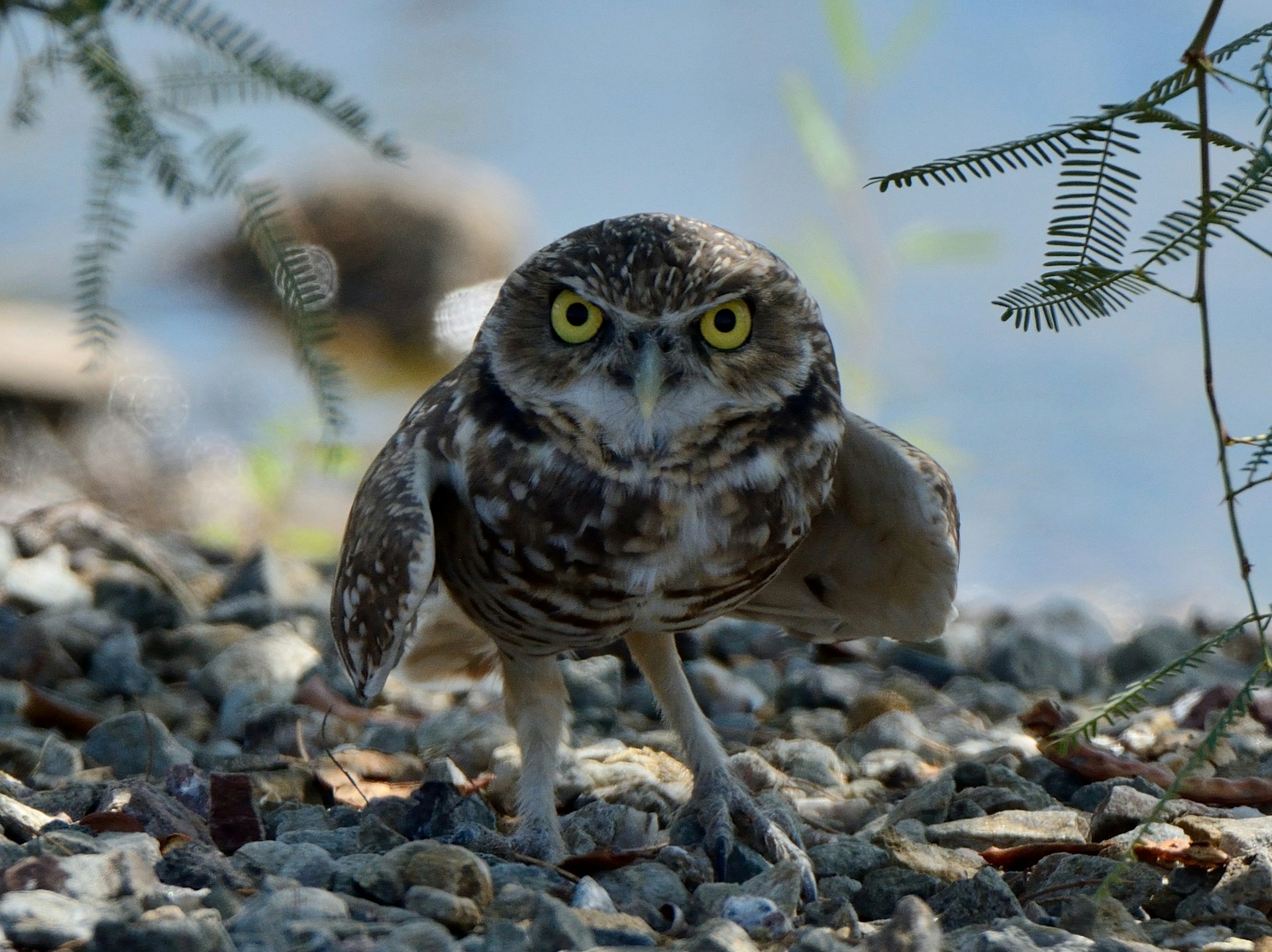
But young nighthawks and nightjars aren’t defenseless. Like their parents, they’re already masters of deception. Blending into a landscape, they can try disappearing from threats.
When the fails, young and adult nightjars and nighthawks alike will try deceiving threats. They’ll get big, growl, hiss, and lunge. This is fairly effective, startling and scaring away predators. The birds’ practically transform into monsters, as this incredible video of a Eurasian Nightjar display illustrates.
Thoreau was already quite enamored with the appearance and behavior of the mother nighthawk. But the young was something else entirely. “Unlike any that I have seen,” he wrote in his journal in mid-June 1853.
For the rest of his extraordinary account read on.
Thoreau describes a baby nighthawk.
June 17, 1853. One of the nighthawk’s eggs is hatched. The young is unlike any that I have seen, exactly like a pinch of rabbit’s fur or down of that color dropped on the ground, not two inches long, with a dimpling or geometrical or somewhat regular arrangement of minute feathers in the middle, destined to become the wings and tail.

Some rights reserved.
Yet even it half opened its eye, and peeped if I mistake not. Was ever bird more completely protected, both by the color of its eggs and of its own body that sits on them, and of the young bird just hatched? Accordingly the eggs and young are rarely discovered. There was one egg still, and by the side of it this little pinch of down, flattened out and not observed at first, and a foot down the hill had rolled a half of the egg it came out of. There was no callowness, as in the young of most birds. It seemed a singular place for a bird to begin its life, this little pinch of down, to come out of its egg, and lie still on the exact spot where the egg lay, on a flat exposed shelf on the side of a bare hill, with nothing but the whole heavens, the broad universe above, to brood it when its mother was away.
Credits
Featured Photo of Common Nighthawk chicks by Mike Allen. Some rights reserved.
Excerpt from Thoreau’s journal from Thoreau’s Bird-lore, edited by Francis H. Allen (1910).
Leave a Reply