As a qualitative sociologist who’s also a bird-watcher—or perhaps, more accurately, a bird-watcher who is also a qualitative sociologist—I was thrilled to discover Elizabeth Cherry’s book For the Birds: Protecting Wildlife through the Naturalist Gaze (Routledge, 2019).

Cherry is an associate professor of sociology at Manhattanville College in Purchase, New York, mainly researching and teaching in the areas of culture, theory, and the environment. For the Birds is her second book on animals and society. Her first, Culture and Activism: Animal Rights in France and the United States, was also published by Routledge. Both books have also won distinguished book awards from the Animals & Society Section of the American Sociological Association.
For the Birds is a book I wish I’d written. Cherry participated in birding trips and interviewed birders to understand how we think about and act toward birds and the environment. The book dispels stereotypes about birders as obsessives interested mainly, if not exclusively, in their life lists to show how we learn to care about the birds we encounter and the habitats that sustain them. She describes us developing a “naturalist gaze” through which we observe the dynamic relationships between birds, humans, and urban / suburban habitats.
Two of the chapters in For the Birds address birders’ perceptions and ways of talking about specific species and categories of birds. Given my own interest in how people think about Nightjars and Nighthawks, these chapters are of special interest.
Chapter 3 addresses common birds; Cherry shows that birders are not nearly as indifferent toward the typical birds of yards and parks as we normally think. Rather, we take common birds as indicators of relatively healthy ecosystems, particularly in urban and suburban environments.
Cherry also demonstrates how birding trip leaders try to convey this quality of common birds, helping field trip participants value the numerically common birds. Her writing on this resonated with my own experience, both as a trip participant and trip leader. Field trip leaders may draw attention to common birds, teacher novice birders how to identify them, and share origin stories of those birds’ presence in urban and suburban landscapes.
Learning to see the connections between birds, food sources, water sources, and built environments is critically important in this. Urban and suburban habitats come alive when we can perceive these connections. And birders may develop a commitment to stewardship and conservation, creating backyard and neighborhood landscapes that can sustain these connections. That so many birders become proponents of native plants is an example of this.
Chapter 5, meanwhile, addresses the distinctions birders make between “good” and “bad” birds. The former are, in a sense, birds–in–place: native species in balance with ecosystems. Birders are take into consideration commonness of birds. Uncommon birds and/or those that we only encounter during migration tend to be described as “good” birds during and after our outings in the field. Bad birds tend to be species out of alignment with ecosystems — invasive species and those birders consider “harmful” to other birds. Brown-headed Cowbirds, which lay their eggs in the nests of other birds, are the main example of the latter.
For a while now, I’ve found it curious that birders, myself included, will use phrases like “good bird” and “best bird” when describing their outings. I’ve wanted to analyze posts in birding lists to see which birds us birders apply these terms to. My sense is that uncommon birds — migratory ones and colorful ones, especially — most frequently earn this label. I’ll tend to use the term to apply to some migratory vireos in the Front Range of Colorado — Plumbeous and Cassin’s Vireos, especially, but not the rather common Warbling Vireo.
But Cherry shows that birders also consider the broader, ecological context of bird sightings.
Birders deem birds “good” based on their behavior, including how they fit into an ecosystem and how they exercise agency to provide ecosystem benefits.
Cherry, For the Birds, p. 117-18
A bird like the Common Nighthawk — my favorite bird and almost always the “best” bird on my lists when I see this — fits most of these criteria. It is, most of the year, numerically uncommon (by comparison to common birds). Though not difficult to encounter, it’s not exactly easy to encounter. So sightings, too, are rather infrequent in most urban and suburban settings.
But their behavior, too, draws me in: their crepuscular flights; their singular calls; and their intense, unsteady pursuits of prey. (I’ve written of these in “The Nighthawk’s Trajectory,” for the Center for Humans and Nature.) And then there are Nighthawks relationships to ecosystems: their dependence on flying insects as prey and their use of human habitats for nesting, for instance. This is what Cherry means by “good birds” exercising “agency.”
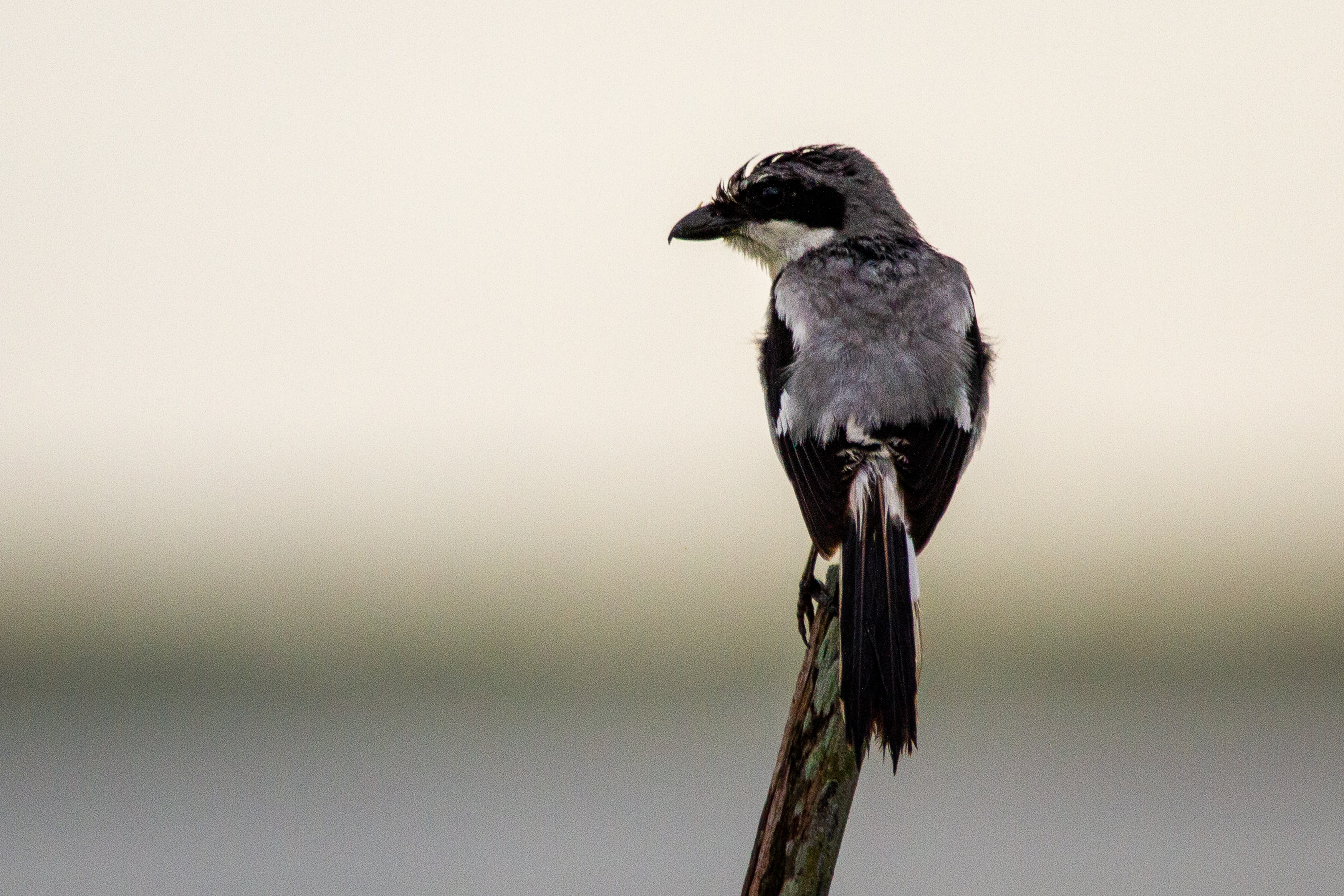
I also have a tendency of designating every Shrike I see — Loggerheads during spring and fall migration, Northern during winter — as a “good” bird. Like nighthawks and some vireos, they’re uncommon. On most bird outings, I don’t expect to see them. They are also rather “picky” in their exercising of agency. They need particular habitats and food sources. In Denver’s suburbs, they tend to prefer weedy, overgrown areas with lots of insects and mice. This means you’re less likely to encounter them in a backyard than you are even the uncommon vireos. And many suburban parks wouldn’t attract them. Rather, you need wilder portions of suburban habitat.

All of this is to say that Cherry’s sociological analysis of how birders think and talk about common, good, and bad birds resonates with — and, indeed, clarifies — the birder’s experience.
Featured photo by Joshua J. Cotten on Unsplash
Leave a Reply