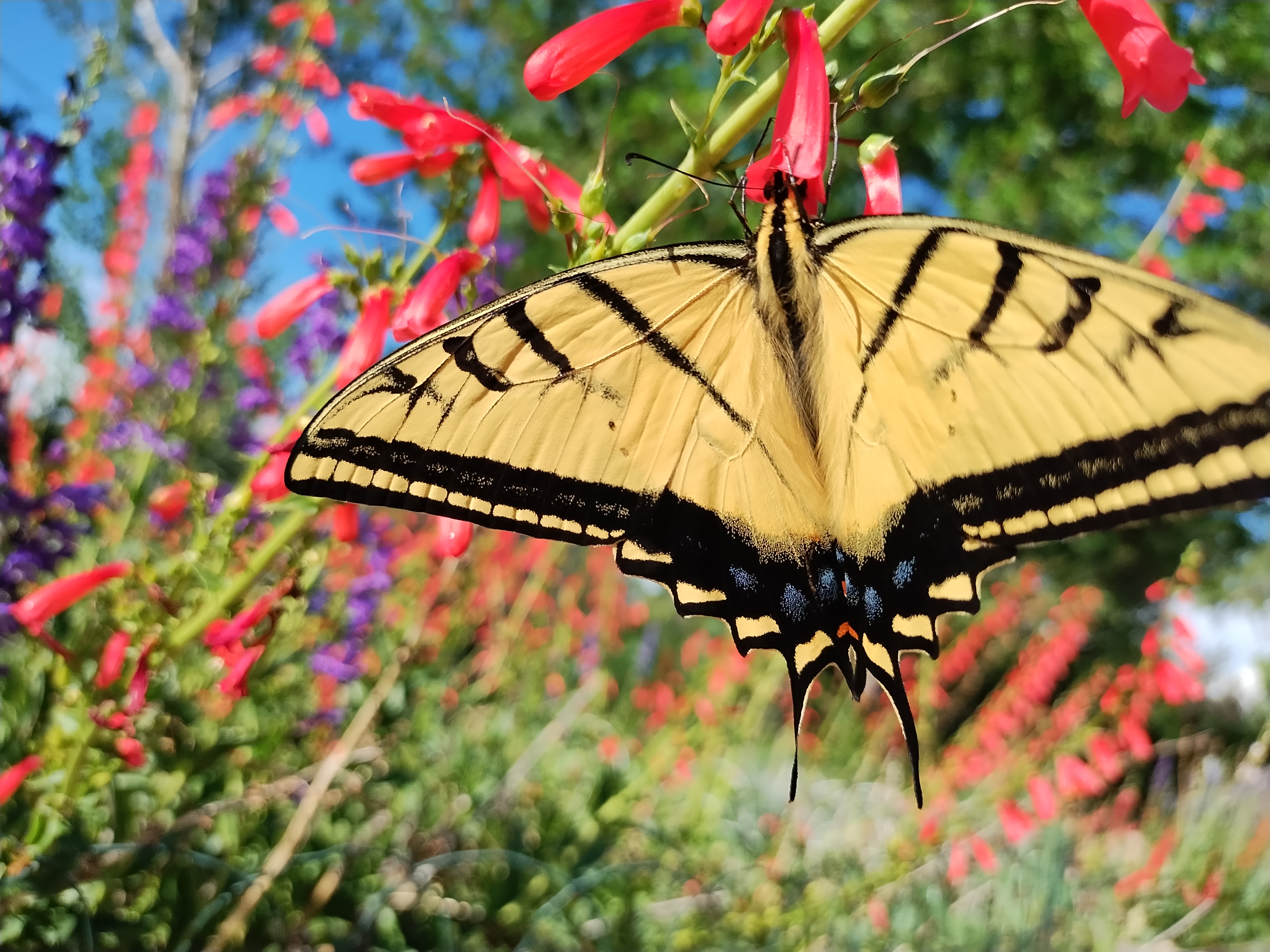
Whether from seed or by transplanting a young plant, Firecracker Penstemons (Penstemon eatonii) are easy to grow. A favorite food of hummingbirds, bees, and butterflies alike, they’re also loved for their tall stalks of vibrant red flowers. And they tolerate heat, sun, drought, and poor soil! What’s not to love?
Where to grow Firecracker Penstemon
Firecracker Penstemon are especially happy growing in the southwestern U.S. The Lady Bird Johnson Wildflower’s Plant Database lists their native range as southwestern Colorado, Utah, central Arizona, and southwestern California. These are tough penstemons, though, and iNaturalist’s map shows them now growing as far north as Montana, suggesting they’re hardy to about Zone 4b.
Growing Conditions
In my Denver, Colorado, area garden, I grow Firecracker Penstemon in full and part sun. They’ve handled some shade in my garden. But here, at a mile high, our sun is a bit more potent than at lower elevations. And the happiest of Firecracker Penstemons — the one tallest with the most vigorous blooms — gets nearly full sun.

Once established, I haven’t watered Firecracker Penstemon. It’s handled moderate drought. It’s also handled the relatively wet spring and summer of 2023, when the Denver area saw nearly 23 inches of rain. That may not sound like a lot, but it’s almost double what we normally get!
In my backyard, Firecracker Penstemon grows directly in clay soil. It’s made this decision for itself, reseeding wildly. But I don’t consider it “weedy,” as it’s fairly easy to control when young: just pull new plants.
In my front yard, where Firecracker Penstemon grows in direct sun, I amended my clay soil, mixing a generous portion of pea pebble into clay. All my southwest penstemons grown in these conditions seem to like the combination of sun and well draining water.
According to Bob Nold’s excellent book Penstemons, it’s not really necessary to amend soil for penstemons, at least in semi-arid places. (Thinking of buying Nold’s book? Splurge for a used copy of the hardcover. The paperback is in black-and-white.) If you’re thinking of trying Firecracker Penstemon in a wetter climate — or your penstemon is going to occasionally receive irragation — quickly draining soil is probably a must.
While Firecracker Penstemon is adaptable, it’s a also somewhat short lived perennial. My first plant lasted about 4-6 years. I regularly loose a few Firecracker Penstemons each year, not only to advanced age but to reasons a bit beyond me. That I’ve gone from one to dozens through reseeding buffers the loss.
Firecracker Penstemons also do best when they have space to spread out. Ensuring they have about a foot on all sides to spread is best, but they’ll often undo your planning by reseeding right next to themselves.
How to start Firecracker Penstemons from Seed
Firecracker Penstemons are relatively easy to grow from seed, and they reseed willingly. You can collect your own seed from your plants in the autumn, once the seed heads dry.

But it’s also fairly easy to find Firecracker Penstemon seeds for purchase. (Mine are originally from Western Native Seed here in Colorado.)
Penstemons seeds are miracles of natural engineering. Tougher, even, then the plants that grow from them, Firecracker Penstemon seeds look like jagged stones — maybe meteorites in miniature! They definitely don’t look list seeds to me!

That they’re so tough means you’re going to have stratify your seeds before you can use them. If you’re directly sowing into a garden, just put down a generous amount of seeds where you’d like this penstemon to grow. Do so in late-autumn or early-winter, so the seeds have time to stratify naturally. And expect to wait through a few winters to see young penstemons.
If you’re using a cold stratification method, expect to wait 30-60 days for germination. But keep an eye on seeds in your refrigerator, as some will germinate right in its cold, dark, moist conditions.
I usually put seeds in a ziplock bag of damp sand and keep these in a mini-fridge. Using a permanent marker, I label the bags with species name, date they went in the fridge, and number of days for cold stratification. I check them daily, after a week or two, looking for seeds that germinated. Occasionally, I need to spritz the bag with a little more water to keep the soil damp.
I’m a bit of a beginner with cold stratification, so for more, check out this PDF by Prairie Moon.
Transplanting Firecracker Penstemons
Whether from my garden or from a pot, I try to transplant penstemons in late April or early May, even if this means protecting my plants from frosts. I’ve read you ought to transplant even sooner than this, to give your young plant weeks of cool weather to put down roots. I’m not brave enough in the face of Denver’s “spring” — blizzards and ridiculous cold snaps.
Keep in mind that even a drought tolerant plant as tough as Firecracker Penstemon needs help its first-year in the ground. A young, transplanted Firecracker Penstemon is not yet drought tolerant. (But we take a growth mindset, of course!)
Water. I try to transplant when clouds, mild weather, and even rain are in the forecast. Basically, I want to give the young plant a soft landing. If I can’t do that, I’ll keep the transplant from drying out for about 7-10 days, depending on temperatures. I’ll then extend the time the young plant goes without water — first to about 3 days, then to nearly a week, then to a week. But through Colorado’s summers, I’m usually watering transplants every 1-1.5 weeks to help them survive. If you’ve directly sown penstemon seeds, you usually don’t need to do this, which is why I try to direct sow alongside relying on potted plants.
Shade. I’ll also provide partial shade for a young plant, especially if summer is hot. Usually, this just means putting the pot the plant grew in next to it for a few weeks, so it gets shade during the mid-to-late afternoon.
Blooms & Pollinators
Firecracker Penstemons bloom in late-May through early-June in my yard. It’s short season, for sure. But it’s worth it. They send up tall stalks, about 18-24 inch and sometimes taller, of vibrant red flowers. When lit by a rising or setting sun, the flowers are especially lovely, as they seem almost translucent.

Many people plant Firecracker Penstemons to attract hummingbirds. After all, they have tubular, deep red flowers, a hummingbird favorite. And hummingbirds will indeed visit Firecracker Penstemon, though I’ve found it’s not always their first choice in my garden. For that, it’s Sunset Crater Penstemon (Penstemon clutei). Male hummingbirds often display over patches of red and pink penstemons, defending them from all avian intruders.
Here’s a video (slowed down) of a Broad-tailed Hummingbird visiting Firecracker Penstemons in my yard.
But just because a flower attracts hummingbirds, doesn’t mean that other species aren’t interested. In my yard, butterflies occasionally feed at Firecracker Penstemons. More common are bees. Non-native Western Honeybees are most common, but bumblebees also visit. Here in Denver, yellow-and-orange Hunt’s Bumblebees (Bombus huntii) are the most common bumblebee to visit Firecracker Penstemon. Hunt’s Bumblebees are small enough to manage at Firecracker Penstemon’s relatively narrow and slight blooms. But I’ve seen other bumblebees visit it, too, including this unidentified yellow-and-black bumblebee.

Bumblebees prefer larger, more open penstemon blooms. They especially like those on Rocky Mountain Penstemon (Penstemon strictus) or Palmer’s Penstemon (Penstemon palmeri). On these larger flowers, bumblebees can practically walk in the flower, disappearing to collect nectar and pollen. On the narrower Firecracker Penstemon flowers, bumblebees have to hang on and feed from outside the blooms.
Drought tolerant, heat tolerant, nearly pest free, and a favorite of pollinators. Why not give Firecracker Penstemon a try?

Leave a Reply