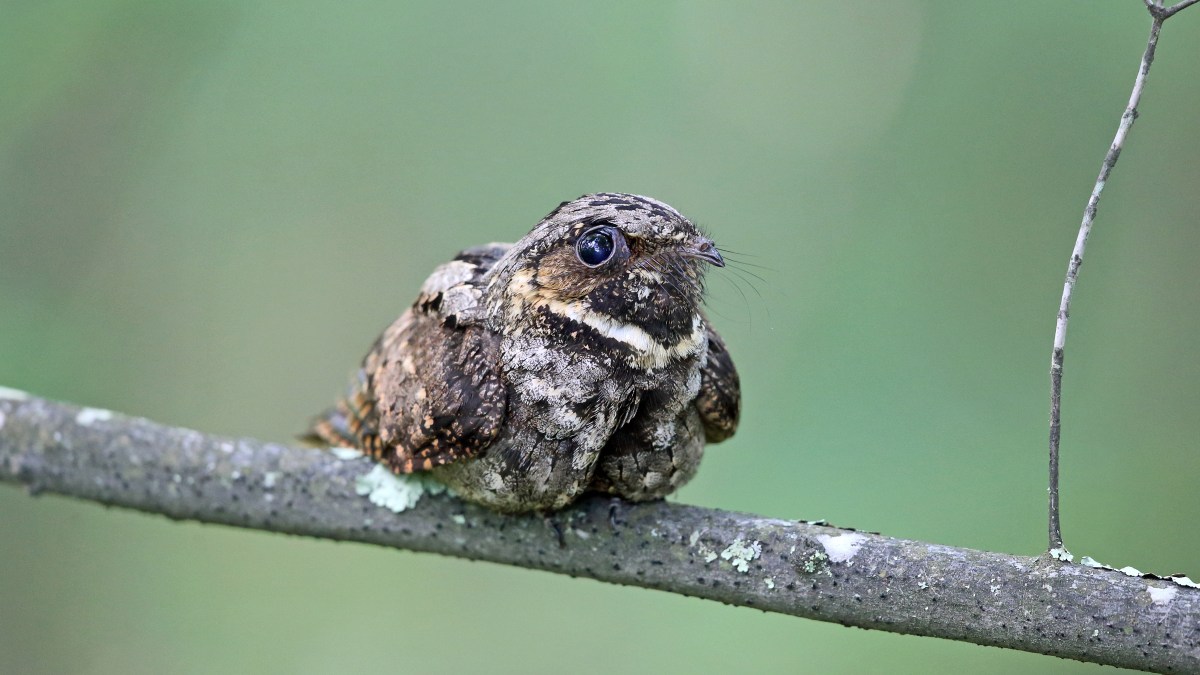
Bird names are more than a collection of words by which we know a species, genus or family. Names carry folklore, belief, and the history of language itself.
What is a Goatsucker?
I find this easy to observe with nightjars, a favorite bird family of mine that includes poorwills, nighthawks and other twilight fliers. Besides that curious “nightjar” label itself, those species famously have an even stranger alias: Goatsucker. It reveals an ancient, erroneous belief about these gape-mouthed, night-vision wonders — that they suckled domestic goats at night, blinding the goats in the process. This legend and the name itself are more than 2,000 years old. Around 350 BC, Aristotle recorded it in his 10-volume History of Animals:
The goatsucker . . . flies against the goats and sucks them,
whence its name . . . . They say that when the udder has
been sucked that it gives no more milk, and that the goat
becomes blind. This bird is not quick sighted by day, but
sees well at night.
Of course, nightjars don’t drink the milk of goats, but there may be a bit of fact in this folklore. Nightjars may get close to domestic animals to eat the flying insects that they attract. The scientific name assigned to the nightjar family and closely related bird “allies” commemorates this word origin: Caprimulgidae comes from the Latin words for goats and milking.
What is a Nightjar?
The history of “nightjar” is less well known, but to me quite poetic and evocative.
The “night” part is obvious, for the birds’ twilight and nocturnal activity. The second syllable, “jar,” packs more meaning. The word pertains to the call of the Eurasian Nightjar (Caprimulgus europaeus), a mechanical “churr” far less melodious than North America’s various “wills” (Whip-poor-will, Chuck will’s-widow, and Common Poorwill).
That led to calling it “nightchurr” and “churnowl.” Eventually “churr” became “jar,” and the Oxford English Dictionary tells us that word once meant “a harsh inharmonious sound or combination of sounds.” It is also a verb, meaning to unsettle, which adds a shade more meaning to “nightjar.”
Perhaps we birders will embrace this double meaning and begin to go “nightjarring” like we go “owling.” In the same sense, it would simply mean to seek out nightjars at dusk. In another way, it might mean allowing ourselves to be “jarred” by these remarkable birds, the way other beings seem to haunt us when our vision is poor and the darkness deep.
North America’s Nightjars
The names of North America’s nightjars tell their own stories. The “wills” all seem to go by their two- to four-syllable calls. The Cornell Lab of Ornithology’s Birds of the World entry for the Eastern Whip-poor-will (Antrostomus vociferus) states it plainly: “Few North American species say their name as clearly. . . .”
But all translations of birdsong into human languages must be simplifications, a fact long noted in the English treatment of the Whip-poor-will. One can almost feel John J. Audubon’s skepticism about this translation in his account of the bird’s call:
“A fancied resemblance which its notes have to the syllables whip-poor-will, has given rise to the common name of the bird.”
There are many ways to hear this nightjar’s song. In other languages, Whip- poor-wills sing other names. One Spanish name for the Whip-poor-will is Cuerporruin (or Cuerpo ruin, translating to “contemptible body”), which to my ears matches the bird’s song well. The same goes for the French-Canadian name, Bois-pourri, which translates into “rotten wood,” a feature of the Whip poor-will’s habitat in the rich forests of eastern North America.
The Meaning of Names
Obviously, there are other ways to translate nightjar songs into language, which leads me to wonder how both the Whip-poorwill and the Chuck-will’s-widow (Antrostomus carolinensis), a large nightjar of the Southeast, got their names. As seen and read, both are meant as imperative sentences, with “whip” and “chuck” as verbs commanding action.
In the case of Whip-poor-will, the sentence orders: “Administer a whipping to Will,” who is poor for being impoverished, misfortunate, or both. Another folk name for this species changed the object of punishment to women: “Whip-her-well.”
Both names recognize the role punitive whipping had in English and, subsequently, earlier American society, in the North and South alike. For “chucks,” as the southeastern birds are sometimes called, the name is more ambiguous, but it’s not hard to imagine a similarly violent meaning. In an 1896 essay on these names, the ethnologist Albert Samuel Gatschet claims “chuck”
means “choke.”
Such names have implications. I’m researching how whipping figured in folklore surrounding Whip-poor-wills. For now, I’ll note only that social and cultural histories of brutality are hidden in plain sight in these two birds’ names.
Folk Names for a Confounding Family
Our Common Poorwill, with its brief, plaintive call, recalls the East’s “will.” Perhaps poorwills have fewer and less evocative folk names because they were encountered later by English speakers in the New World. And yet, in North American Bird Folknames and Names, James Kedzie Sayre finds nearly 40 folk names for our Common Nighthawk. Many suggest confusion about just what sort of creature the nighthawk is, e.g., Booming Swallow and Bull-bat.
Early naturalists also mistook nighthawks for Whip-poor-wills and Chuck-will’s-widows. The “wills” sing their names through dawn and dusk, but generally are inactive during the day. By contrast, nighthawks sometimes fly by day, and their twilight flights make them far more visible. The species were often confused because nighthawks could be seen when wills weren’t singing and wills could be heard when nighthawks weren’t flying.

Ornithologists and birders today know better. Yet we still use an ill-fitting, hand-me-down name for nighthawks, which actually prefer dusk to the night. And, of course, they’re not hawks, though some 18th-century accounts thought differently.
For being unusually shaped, beguilingly voiced birds that we encounter in low light, nightjars and nighthawks have been subject to far more intrigue, misunderstanding, and lore than most birds. What we call them reflects this.
I’m writing a book about Whip-poor-wills in American culture. Sign-up for my newsletter to receive seasonal updates about it, beginning in 2024!
For more on this broad topic, consider Susan Myers’s The Bird Name Book: A History of English Bird Names, and Stephen Moss’s Mrs. Moreau’s Warbler: How Birds Got Their Names.
This essay originally appeared in the Denver Field Ornithologist’s February and March issue of The Lark Bunting. I’ve lightly edited it for readability. Featured photo by Tom Murray (CC BY-NC 2.0 DEED)
Leave a Reply