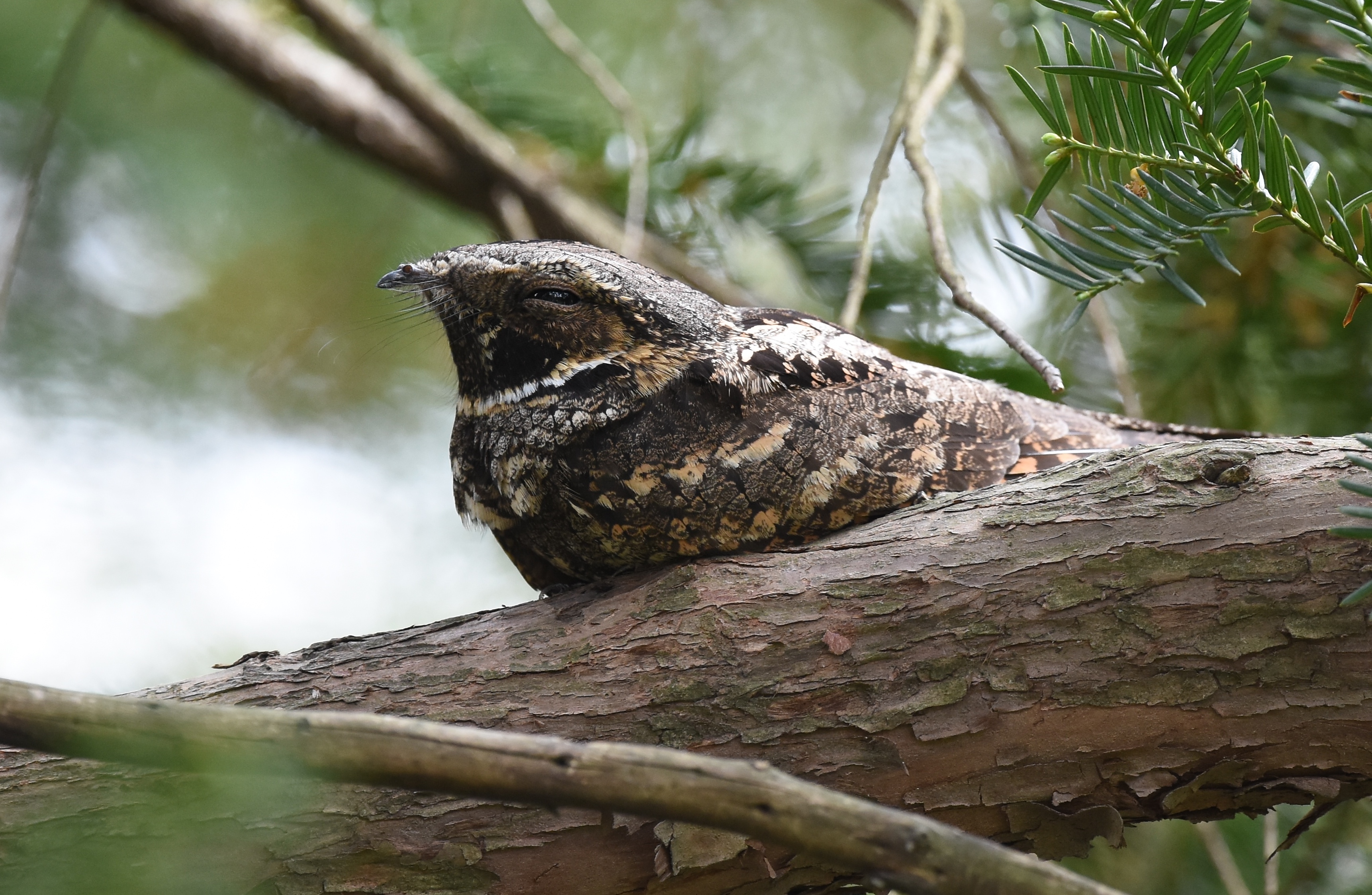
For generations of Americans, the Eastern Whip-poor-will has been important symbol. But hearing a Whippoorwill can mean several things. Sometimes, Whippoorwills are birds of good fortune. They can grant wishes, heal pain, and guarantee wealth. Other times, they’re ill omens, and a Whippoorwill singing by a window was believed to mean death. It’s stories like these that I’m collecting for the book that I’m writing about Whip-poor-wills.
It all depends on which Whip-poor-will was singing. Was it the first Whip-poor-will of the year? Then, good things might be coming your way. (But you need to know how to unlock the Whip-poor-wills powers!) Or was it the next Whip-poor-will, and was he singing near your home?
That was the bird Americans worried about.
Song of the Whip-poor-will
Whip-poor-wills are members of the Nightjar family. They’re nocturnal birds, whose remarkably cryptic feathering renders them nearly invisible in the eastern US and Canadian forests they nest in. Most of us will never see the birds. But if you live near one, you may very well hear him.
Through much of the spring and early summer, male Whip-poor-wills establish territories and attract mates through their call, a repetition that sounds (just a little) like their name, “Whip poorwill.” To us, the song sounds like it has three syllables, though sometimes “poor” is represented as a two syllable word or sound. Henry David Thoreau, for instance, sometimes called Whip-poor-wills “Whip-or-I-will.” Both Sibley’s and Pieplow’s field guides also represent the call as being four syllabled.
Phenology & the First Whippoorwill
The most important Whip-poor-will of the year was the first. Some of the beliefs about the first Whip-poor-will are part of phenology, the study of the relationships between the climate and other biological events.
Whip-poor-wills return to their breeding range in the northeast US in April and May. Their arrival, in the form of the first Whip-poor-will’s song, was understood as a season sign. The bird’s song meant an end to the threat of frost and the arrival of spring.

Yes, move over robin. The Whip-poor-will may the North American bird that most symbolizes spring.
With this, all sorts of other changes followed. The end of frosts meant it was time to plant tender plants, like corn and beans. Europeans and their descendants borrowed Indigenous and created several other beliefs related to the Whip-poor-wills’ arrival. Folklore held that with the Whip-poor-will’s first song, it was time for children to go barefoot. In the midwest, the first’ Whip-poor-will’s song meant it was time to let cattle on to pasture, because grasses would finally be ready for grazing.
One American went so far as to use the return of Whip-poor-wills as his own personal calendar, getting his spring haircut only after he heard the bird’s call.
The Magic of the First Whip-poor-will
The first Whip-poor-will wasn’t just a seasonal sign. It also had magical properties.
One superstition holds that the year’s first Whip-poor-will can predict the number of years you have left to live. Or your years until marriage, if you’re hoping to get married. Just count how many times the bird repeats his name to know how many years you’ve got left.
The year’s first Whip-poor-will could also cure backaches, though you had to roll or somersault(!!!) three times upon hearing him to guarantee health for the next year.
He could also guarantee wealth, but you had to have a pocket or purse full of coins when hearing him. And you had to vigorously shake those coins as he sang!
The song of the year’s first Whip-poor-will could also grant wishes or make dreams come true. But to activate this magic usually required an especially elaborate ritual. Here’s one, documented in an 1899 article in the Journal of American Folklore.
H.M. Wiltse, 1899, “Some Mountain Superstitions of the South”
When you hear the first whip-poor-will in springtime, you should lie down upon the ground, roll over three times, then reach your left shoulder and pick up the first thing that your hand rests upon. Put this under your pillow at night, go to sleep lying on your right side, and whatever you dream will surely come to pass.
A Whippoorwill at Your Window
If the first Whip-poor-will was highly anticipated, the next was feared.
Night birds who sing a song with an ominous message, Whip-poor-wills have long been viewed as birds of “ill omen.” Among Europeans and their descendants, these beliefs date at least to the 18th century. Reference is made to this in the naturalist George Edward’s 1770 book, Essays Upon Natural History.
Eighty years later, Henry David Thoreau scolded his neighbors for believing this about the birds. In his June 11, 1851, entry in his journals, Thoreau writes,
The whip-poor-will suggests how wide asunder [are] the woods and the town. Its note is very rarely heard by those who live [in town], and then it is thought to be of ill omen.
But ill omens of what?
The song of a Whip-poor-will, when heard by a home, outside a window, or on a doorstep, meant death. An 1892 article in the Journal of American Folklore documents this superstition in Maine.
If a whippoorwill sings night after night near a door or under a window it is a sure sign of approaching death in the house. For instance: A whippoorwill sang at a back door repeatedly; the woman’s son was brought home dead, and the corpse was brought into the house through the back door.
Gertrude Decrow, 1898, “Folk-Lore from Maine”

Whippoorwills and the Human Soul
Eventually, some of these beliefs morphed into deeper, more spiritual ones. For instance, the writer H. P. Lovecraft featured Whip-poor-wills as psychopomps in his classic of weird fiction, The Dunwich Horror.
What’s a psychopomp? “A conductor of souls to the afterworld,” according to Merriam-Webster. Lovecraft’s Whip-poor-wills weren’t so benign in their collection and movement of souls. Of the birds, he writes,
If they can catch the fleeing soul when it leaves the body, they instantly flutter away chittering in daemoniac laughter; but if they fail, they subside gradually into a disappointed silence.
Lovecraft claimed he adopted New England legends about the birds in The Dunwich Horror. I’ve not yet found evidence that New Englanders indeed believed the birds collected souls, though the general association between Whip-poor-wills and death does show up in folklore studies.
Either way, Lovecraft’s psychopomps are influential. Stephen King references this in his novel The Dark Half (set, of course, in Maine) — even going to far as to invent a fictional reference book on American folklore as a source! Meanwhile, the bird as psychopomp appears in the card games Magic the Gathering and Arkham’s Horror, and the Netflix animated series The Midnight Gospel.
The Last Whip-poor-will?
All of these beliefs suggest how important Whip-poor-wills have been to U.S. culture. We can’t understand ourselves without understanding what Whip-poor-wills mean to us.
But what does it mean to hear a Whip-poor-will today?
Whip-poor-will populations have declined markedly over the past half century, and, across their breeding range, Whip-poor-wills are species of special concern and conservation need. It’s less and less common to encounter the bird’s song.
So if you’re lucky enough to hear one, take time to listen. (Want to hear a Whip-poor-will? Here are some of tips to find the right place at the right time.) Consider counting the calls, as people once did. Or maybe just note what changes the day after. What blooms? What ripens?
Or if you want, test the old ways. Roll thrice and make a wish. Perhaps one that ensures our world has room enough for Whip-poor-wills.
Want more Whip-poor-will in your life? Subscribe to my newsletter. I’ll tell you more about the book I’m writing on Whip-poor-wills and share the stories, songs, and poems that make the bird so special to us.
Got a favorite song or story about Whip-poor-wills? Or have a question? Tell me about it!

Featured Photo by Andy Reago & Chrissy McClarren




Leave a Reply