
Songs and calls make up the language of birds. But scratch the surface of the English language and you’ll find that birds have other ways of speaking to us.
Bird is the Word
Indeed, birds run deep in our linguistic DNA. The Romans gave us the word auspicious, from their practices of reading signs in the movements of birds. (Roman religious seers also “read” the entrails of sacrificed birds for omens good and bad, but that’s another topic for another time.)
On the flip side of fortune is jinx, from the scientific name for the Eurasian Wryneck (Jynx torquilla). This unique, Old World woodpecker was often used in casting spells and charms, perhaps because of its uncanny defensive displays. Wrynecks can twist and rotate their heads almost 180 degrees, seeming to transform into snakes as they do.

The sounds birds make give us other words. Jargon, a favorite of today’s academics and technocrats, once merely meant the “inarticulate utterance of birds, or a vocal sound resembling it.” The verb twitter is one example. Before becoming a social media platform (with its iconic logo of a bird in blue silhouette), “twitter” and “tweet” were made by our feathered friends, not our thumbs and fingers online.
It is often difficult to know if humans derived words from birds, or named them with the words we use to describe them. Both the species name “crow” and the act of crowing come from Old English, and untangling their origins now is probably impossible. We don’t know if we crow because crows crow or if we call crows “crows” because they crow. We do know that corvids give lie to the human insult “bird-brained.” An apt saying that is often cited (but ultimately misworded and misattributed) puts this well: “If men had wings and bore black feathers, few of them would be clever enough to be crows.”

By contrast, there are fools — the gulls and gullible — with an etymology that may have nothing to do with those sometimes clownish “sea” birds we find around reservoirs and grocery store parking lots.
Even recent linguistic inventions may be muddy. Did nighthawks, the uncommon crepuscular birds, give us “nighthawks,” as in this famous painting by Edward Hopper? According to the Oxford English Dictionary, using the word to describe habitually nocturnal people, those who we sometimes also call night owls, dates to the 19th century. As American and European cities began to light the night with gas lamps, “nighthawks” also came to mean both after-dark thieves who preyed on gulls and the night watchmen hired to thwart them.
Many evenings, I have chased nighthawks, which are my favorite bird and an auspice to me of the ecological health of Denver’s suburbs. But nighthawks are in widespread decline, as are their mammalian counterparts, the bats, probably in part because of declines in their flying insect prey. When bats are around, I find them more frightful than nighthawk the bird (but not the human nighthawk). I have had to duck at times to avoid them as they feed on unseen insects.
Which makes me wonder: Did I duck because ducks duck? Or are ducks called “ducks” because they themselves display that maneuver, whether diving for food or escaping above-water threats? The word origins of this one are as unclear as my questions! Clearer though is that we hope to avoid being a “sitting duck,” a “duck out of water,” or a “lame duck.” We try, however, to keep our “ducks in a row.” Perhaps the surfeit of duck idioms has to do with their long-standing place in human diet, hunting, and carnival games.

Many summer mornings, I have looked for the nighthawk’s relative, the Common Poorwill. It’s tough business, waking before an already too early sunrise and driving out to the Gambel’s Oak thickets in Douglas County. But it’s worth it. (The early bird, whether feathered or human, gets the worm, right?)
A British equivalent is to “be up with the lark,” though now that I think of it, the birder who wakes with worm-hunting robins or the skylarking larks probably misses the nightjars. Even so, I’ve gone birding on a lark. What better way to bird than joyfully and carefree, as larks are said to be?
A Bird in the Hand and a Word, Too.
Other avian clichés abound. As a gardener, I try not to count my seedlings before they sprout, but only because a proverb dating to at least to 16th century (and inspired by one of Aesop’s Fables) tells us not to do the same with chickens and when they hatch.
Most people don’t mind “killing two birds with one stone.” But some people, me included, try to rid their vernacular of violent imagery. The House Sparrows hanging around outside Denver’s coffeeshops would surely agree: a better replacement for this is “Feeding two birds with one scone.”
As a birder, I don’t trust some of the best-known bird clichés. Two birds in the bush are most certainly worth more than one in the hand. (They might be rare warblers!) As for birds of a feather flocking together, that’s usually true. But every birder has had this experience: You linger on a flock of identical white-cheeked geese until a bird of a different feather reveals itself — a Greater White-fronted Goose, a Brant, even the rarer Pink-footed Goose.

Sometimes, birds of a feather are more than they seem. Only about 25 years ago, Colorado’s Black-billed Magpie (Pica hudsonia) was considered a subspecies of the nearly identical Eurasian Magpie (Pica pica). We took the family name, which derives from the Latin word for magpie, and stretched its meaning. As a both a word and a medical diagnosis, “pica” refers to a tendency to eat “non-nutritive, non-food substances.” (Chalk or ashes are the examples Merriam-Webster gives.) Young corvids, magpies included, are known to test the edibility of anything that catches their eyes. I have seen first-year magpies turn my yard into a playground and buffet all at once. One pulled the product tag off a solar light, something I’d forgotten to remove. Was the bird practicing opportunistic hunting, or just taste-testing the tag?
A Bird by Any Other Name
The scientific family name for wrens blends name-calling with ornithological observation. Wrens are troglodytes — Greek for “cave-dwellers” and known for nesting in cavities and hunting in crevices. I’ve watched Northern House Wren parents disappear into folds in landscape fabric to collect every spider and larva hidden there. I’ve watched Rock Wrens duck into holes in logs to gather roly-polies (pill bugs). And so the family and genus names for wrens are variants of that difficult word, which also refers to the prehistoric people we once called “cavemen.” Today the term is sometimes an insult used for people whose outmoded habits and attitudes remind us of cave-dwellers.
Of course, “Wren” is also a human name. Unlike “Phoebe” and “Robin,” the human name appears to have derived from the bird name, not the other way around. Some surnames – Heron and Crowe, for instance – appear to have roots in people’s resemblance or relationship to birds.
Sports also make great use of birds, even if not exactly ornithologically correct bird-based mascots like Cardinals, Blue Jays, Jayhawks, Hawks, Seahawks, Eagles, Falcons, Nighthawks, and the like. And golf itself offers us “birdies,” “eagles,” “albatrosses,” and, rarity of rarities, “condor.”
Do hawks hawk, and why do we?
Birders of a certain age might recall baseball great Andre Dawson’s nickname, Hawk. We describe outfielders and NFL cornerbacks, NBA defenders, and MLB outfielders as “ballhawks” for their ability to run down opposing teams’ throws and hits, not unlike how that raptor chases down prey. (But let’s be honest: Isn’t Peregrine Falcon, with its ability to snatch birds out of the air, the a more appropriate metaphor?) Speed and agility seem prerequisites for the ballhawk, though being eagle-eyes probably helps, too.
But then, what is a hawk? It’s an old word, “inherited from Germanic,” says the Oxford English Dictionary, perhaps referring to an action in which hawks and ballhawks alike are experts: “to seize.”
As with the ducking ducks and the crowing crows, the hawking hawk leaves us in that chicken-and-egg situation, perpetually wondering which came first: the bird or the word?
Want more? The etymologies I refer to here come from the Oxford English Dictionary (subscription or library access needed) and Merriam-Webster. Jeremy Mynott’s book Birdscape and Tim Birkhead’s Birds and Us cover some of this, too. Peter Tate’s Flights of Fancy: Birds in Myth, Legend, and Superstition does the same for European lore around the continent’s common birds. Some of that Euro-lore informs the linguistic meanings that we here in the States have attached to birds.
This essay originally appeared as part of my recurring feature, “The Lives of Birds” for Denver Field Ornithologist‘s quarterly magazine, The Lark Bunting. Thanks to Patrick O’Driscoll, the editor of The Lark Bunting, for providing feedback and suggestions on drafts of this.
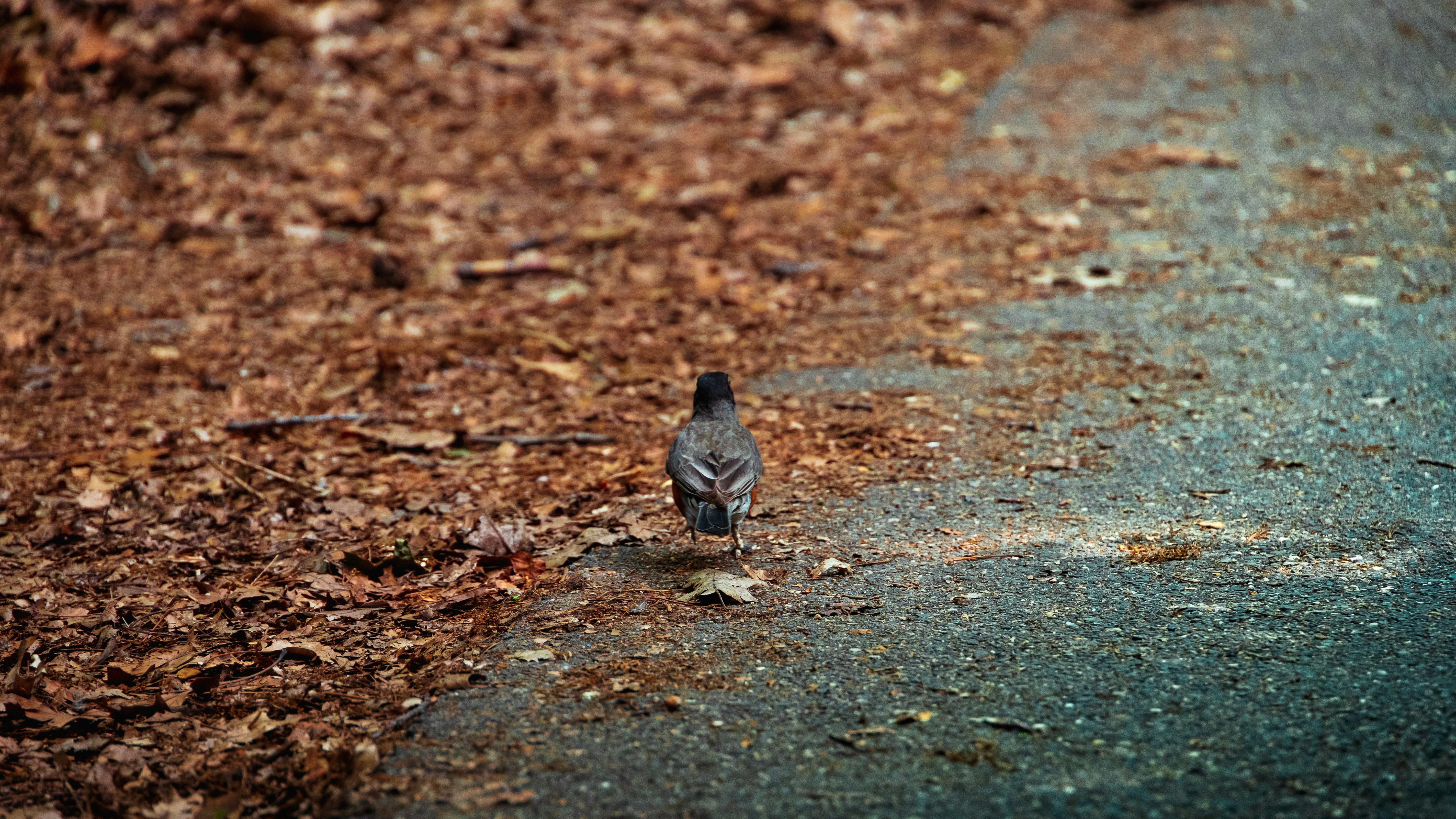
Featured photo by inanc avadit on Unsplash


Leave a Reply