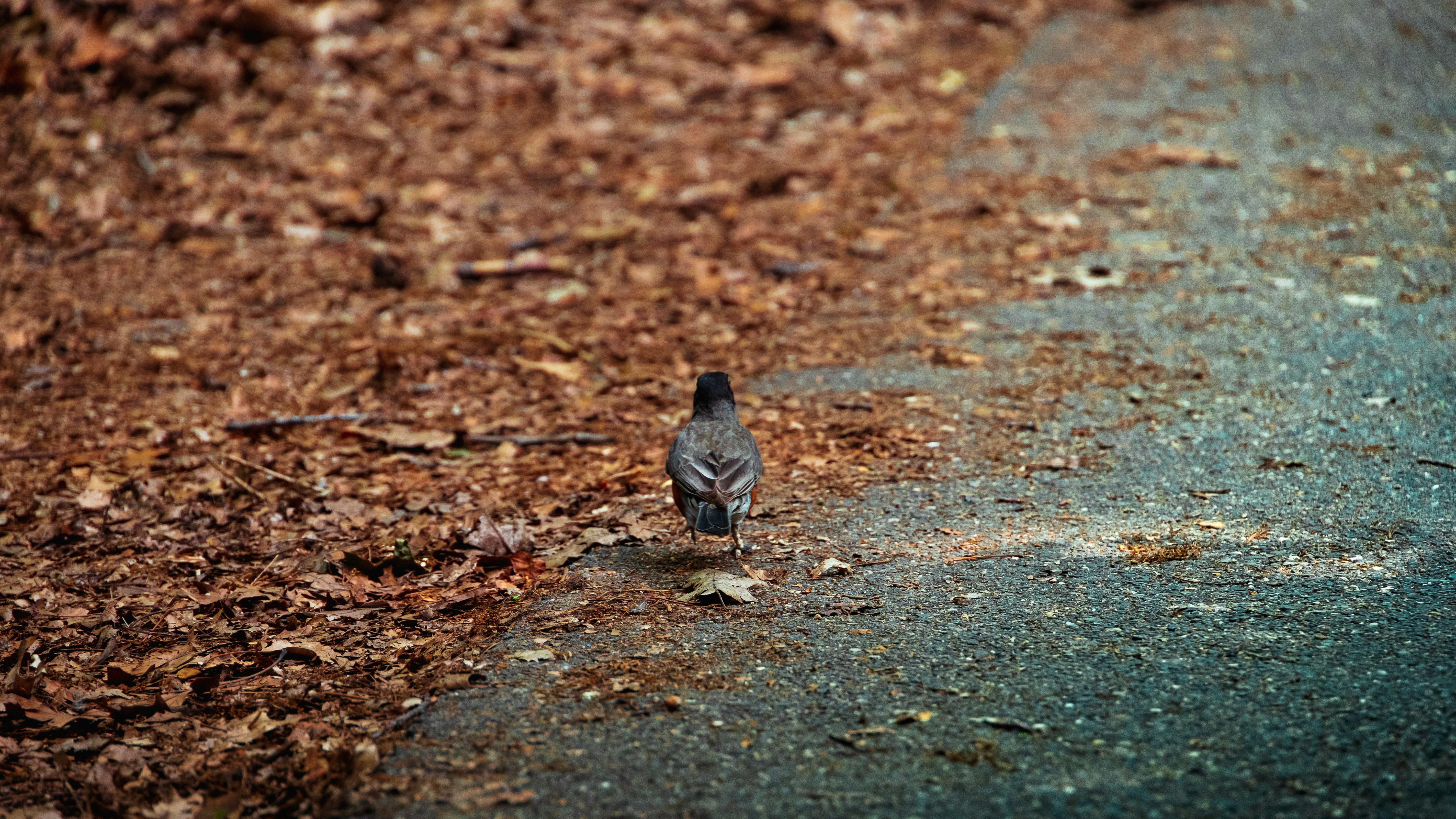
Here’s a radical thought: This fall, commit to doing nothing . . . for your local biodiversity. As the migration season winds down, you can support backyard biodiversity by doing anything BUT what you usually do this time of year. Leave the yard alone and instead devote your time to anything else.
Still chasing rare warblers? Go birding even more! Is the new-season glut of TV premieres and live sports calling you? Binge! Are you not yet nauseated by the artificial autumnal aroma of pumpkin spice? Go get another latte! Do anything but garden. Just don’t. Don’t rake your leaves. Don’t pick up sticks and branches. Leave those spent wildflower blooms and stalks alone. The truth is, most other species, birds included, prefer disorderly messes to meticulously managed landscapes.
There is a host of reasons why, but they all boil down to a simple truth: Disorder is complex, and neatness is not. Complexity provides and nurtures a diversity of micro-habitats, food sources, and shelter in that untended winter garden. Simplicity’s neatness denies most of that for every other species except us humans.
With this in mind, here are five things you don’t have to do in your yard this fall to support biodiversity.
Do nothing for biodiversity: #1 Don’t rake those leaves
Leave your leaves alone! Perhaps you’ve heard this advice before. It’s true. Leaves feed the soil by feeding organisms that promote decay: fungi, worms, beetles, springtails, and other microscopic beings. A rich layer of fallen leaves provides sheltering habitat for overwintering insects, especially moths and queen bumblebees. And they provide you, the birder, with this: a crunchy floor beneath your shrubs and trees where you’ll see and hear sparrows, especially Spotted Towhees, scratching for vital morsels through the winter.
I realize this no-rake advice may not work for everyone or in every part of your yard. I vacuum autumn leaves off my hardscaped front yard every year. It’s a compromise that keeps my xeric garden tidy, the neighbors happy, and the cacti and yucca I grow there protected from rotting under the dampness of downed leaves.
But I keep and use those leaves. They offer high-carbon “browns” for composting to complement the nitrogen-rich “greens” of kitchen scraps. If allowed to break down into leaf mold, they also create some of the richest organic matter you’ll find. While most Colorado native plants don’t want or need leaf mold mixed into their soil, you can use leaf mulch in vegetable gardens or bedding of garden plants from richer habitats
Do nothing for biodiversity: #2 Don’t throw out branches and twigs
Let’s face it: Our neighborhood trees aren’t supposed to be here. Most are badly adapted to the difficult climate of the Front Range. Late snows in spring and early snows in autumn bring down branches. Strong winds in any season litter our yards with sticks, branches and twigs. They can even split tree trunks.
We probably have no choice but to remove large branches and downed trees. But we can still gather many smaller sticks and branches into brush piles. Although a small brush pile can’t match the ecological benefit of a large, naturally formed pile in the forest, it does attract spiders, bumblebees and garter snakes to an urban or suburban yard. Like leaves, brush piles are overwinter shelter for all kinds of insects (and safe cover for small birds, too). They can also do double duty as lattices for native vines such as Thicket Creeper (Parthenocissus inserta) or Old-Man’s Beard (Clematis ligusticifolia).
If your yard has room for small stick piles, your birding benefits can show up in July, when young house wrens fledge. Northern House Wren adults are voracious hunters of soft-bodied insects and spiders, and they’re especially skilled at disappearing into landscape nooks including brush piles. Fledglings like them, too. While wandering around my modest suburban yard in the summer of 2024, I encountered an entire family of young wrens perched inside a stick pile, waiting safely for their parents to return with food.

Do nothing for biodiversity: #3 Don’t bag grass clippings
Impressive but often non-native grasses are common décor in yards around Denver. Massive “hardy pampas grass” is among the most conspicuous, forming massive clumps with flowering stalks reaching up to 10 feet tall. In fact, it is a Mediterranean species and not from the Pampas of South America. I admit to a certain admiration for this grass, which on the Denver landscape is outdone by only large shrubs and trees. But the grass has a propensity to reseed itself, and removing a full grown clump may require a front end loader! To avoid this and to prevent other non-native grasses from going wild, I recommend removing the seed heads before wind and birds disperse them. But those of popular native grasses (switchgrass, little bluestem, blue grama) can and should be left for the birds.
The dried leaves of grasses become important micro-habitats for overwintering insects, including queen bumblebees. They’re also popular nesting material for birds, from American Robins and House Finches to Spotted Towhees and Mourning Doves, among others. One of my favorite spring sights is of robins gathering grasses from my yard to weave into the nests they’ll build there and next door.

A little more nothing: #4 Don’t remove spent flowers and stems
The easiest way to garden is to let annuals and perennials reseed where there’s space for them. Leaving their stalks in place allows that to happen. Many songbirds, of course, also feed on the seeds of our wildflowers. Wildflower stalks also benefit insects. Some overwinter in wildflower stems, including solitary mason bees and leafcutter bees. Still other insects, particularly weevils and seed beetles, develop inside the seeds.
Although we often think birds visit wildflower stalks to eat the seeds, sometimes they’re feeding on those hidden insects. Last year, the Eastern Redbud tree in my yard avoided a late spring frost and was covered in seeds, which themselves were packed with redbud seed weevils. When the adult weevils began to emerge from the dry pods in October, Black-capped Chickadees visited daily to peck up most of them. Downy Woodpeckers are also skilled hunters of hidden insects, from Goldenrod galls to Honey Locust Seed Beetles.
Birds even gather seeds for nesting material. Several years ago, I observed a pair of Bushtits collecting the feathery seeds from a neighbor’s Clematis vine. Then last spring, I was surprised and somewhat confounded by a female Broad-tailed Hummingbird paying unusual interest to a Rubber Rabbitbrush, which doesn’t flower until mid-to-late September. Was she foraging tiny insects? Collecting spider silk for her nest? Or might she have been after the plant’s soft seeds for her nest, too? Whatever it was, I couldn’t tell, but I was glad for whatever the plant provided her.
Still Nothing: #5 Don’t clean cobwebs
Are local children likely to think yours is the neighborhood’s haunted house? Definitely! Nothing signals autumn like old spiderwebs, accruing dust and insect carcasses in window edges and around the yard. Leaving those webs alone now will prove valuable to the birds in winter and spring.
Cobwebs are virtual grocery stores for some birds. During winter, I sometimes find Say’s Phoebes hunting around shopping center and office windows. I’m not entirely clear whether live insects are drawn to the warmth of the buildings, or if the birds are finding insect bodies in abandoned spiderwebs. Other birds also feed in webs, though the ornithological community hasn’t given this much attention. In 1976, one bulletin article reported observations of Cedar Waxwings hunting in webs. The following year, an article in the Wilson Bulletin reported on apparent feeding from spiderwebs by species in five families of birds — hummingbirds, wrens, vireos, finches and warblers. Keep a watchful eye on your yard’s cobwebs, record any avian observations in eBird, and perhaps our citizen-science will yield some new discoveries!

Webs are also important nesting resources. In early spring, House Finches inspect cobwebs around my back patio. I’m not sure if they’re collecting the silk for nests, but many small birds do. Hummingbirds, including Broad-tailed, rely especially on spiderwebs to structure and anchor their nests. Even the big, dangling, gourd-shaped nests of tiny Bushtits are built largely with spider silk.
Do nothing for biodiversity? Is it too good to be true?
Is all this really as simple as doing nothing, for the benefit of biodiversity? Almost — though there’s still the work of managing invasive plants and establishing (and reestablishing) native ones. There’s also the matter of neighbors skeptical about the “mess” of your biodiverse yard, though some might be placated by a prominently placed sign announcing yours is Xerces Society “Pollinator Habitat” or that you are an Audubon “Habitat Hero.”
And then there’s this paradox: The more nothing you do this fall, the more you’ll get to watch all winter, spring, and summer. After all, who’s going to eBird all the visits by winter sparrows, keep a distant but watchful eye on the spring nests of robins and finches, and listen to the summer-long hum of bees and Broad-tails?
This essay appeared in the October issue of Denver Field Ornithologist’s quarterly magazine, The Lark Bunting. You can find current and past issues of The Lark Bunting here. Thank you to Pat O’Driscoll for editing the essay and Jennie Dillon for layout and design.
Hanyang Zhang took the featured image. See more on Unsplash.


Leave a Reply