
“One swallow does not make a summer, but one skein of geese, cleaving the murk of a March thaw, is the spring. A cardinal, whistling spring to a thaw but later finding himself mistaken, can retrieve his error by resuming his winter silence. A chipmunk, emerging for a sunbath but finding a blizzard, has only to go back to bed. But a migrating goose, staking two hundred miles of black night on the chance of finding a hole in the lake, has no easy chance for retreat. His arrival carries the conviction of a prophet who has burned his bridges. A March morning is only as drab as he who walks in it without a glance skyward, ear cocked for geese.” – Aldo Leopold, A Sand County Almanac
How far we’ve come since the great conservationist Leopold lionized the Canada Goose (Branta canadensis). Now ubiquitous on the American landscape, Canada Geese are ultra common and, to many birders, unremarkable. For our non-birding neighbors, the birds’ goslings may be adorable urban companions. But the parents of those goslings? Hissing threats that chase after runners, dogwalkers, curious toddlers and, yes, even birders.

Not to mention their reputation as urban blights. Green goose droppings cover and smear park walkways, fill our puppies’ mouths (ugh!), and track home with us on the bottom of our shoes. No wonder some deride them as “lawn carps” — or, as the director of parks and recreation in Greenwich, CT memorably described them in 1992 to The New York Times: “Flying rats.”
But you already know this, because over the past few decades, America’s continental conflict with urban and suburban geese reached Colorado and the Front Range. It simmers today in the suburbs, where communities contract with “pest management” companies to chase our mixed flocks of white-cheeked geese — Canada and Cackling Geese — out of one green space, golf course or subdivision and into another. In the cities, the frontlines are often our great parks, where vast lawns, lakes and ponds sustain year round populations (an estimated 5,000 birds) plus tens of thousands more in migrant flocks that overwinter here and return to Canada in spring to hatch and fledge more geese.
Colorado’s own “Goosinator,” a brightly colored, remote-controlled monstrosity dreamt up and marketed by two Lakewood brothers-in-law, chases away metro Denver geese with scary painted fangs and the menacing buzz of its propeller.
Groundskeepers use more lethal strategies, too. Denver Parks & Recreation oils eggs laid by resident geese to suffocate would-be goslings before they ever hatch. In 2019, the city even culled growing permanent flocks in several parks in a controversial series of goose roundups.
Other cities and suburbs across the US wage similar battles. But like most instances of “nuisance” wildlife, the perceived challenge of residential geese is largely self-inflicted. In his book Nature Wars: The Incredible Story of How Wildlife Comebacks turned Backyards into Battlegrounds, Jim Sterba describes how human practices of hunting, conservation, and suburban development established resident populations of Canada Geese throughout much of our country.
The Goose who Stayed
The story centers on a single and mostly non-migratory subspecies: Branta canadensis maxima, or the Giant Canada Goose. Sterba writes that goose hunters commonly used members of this subspecies as living decoys to attract migrating geese to ponds and lakes. After the federal government prohibited the use of live decoys in 1935, the subspecies lost its purpose to hunters. They sold some of them to communities that set them free on local ponds and lakes. State and wildlife departments bought others to establish local, non-migratory populations.
According to a 2014 Journal of Wildlife Management article on Canada Geese in Colorado, our state had but one breeding population in the 1950s and only one winter concentration. Around the same time, the Colorado Department of Game and Fish (now Colorado Parks and Wildlife) began transplanting three subspecies here, including the Giant Canada. The transplantations continued into the 1960s east of the Continental Divide and the 1970s west of the divide.
At the same time, urban and suburban planners here and across the US created parks, golf courses, campuses, cemeteries, shopping centers, and other spaces that would serve geese as much as they serve people.
Geese, it turns out, have the same kinds of preferences and insecurities as most of us do. Like urban and suburban humans, they love green expanses of lawn and also get flighty around predators. Since the mid- to late 20th century, we have “managed” wild threats from coyotes, mountain lions and bears — as well as domestic risks from neighborhood “strangers” and unleashed dogs. But our manicured turfscapes, so pleasing to human eyes, are also a tasty, three-season bluegrass buffet to goose palates. We and the birds both also love water, so the puddling of our communities with ponds and streams attracts the geese, too. Since neither geese nor humans like hunting in the neighborhood, that activity moved out, and we and the geese settled in side by side.
In other words: We invited geese to join us. We gave them a dream habitat as we built our own dream neighborhoods. No wonder the non-migratory flocks have stuck around for good. Meanwhile, their out-of-town relations are far more numerous, conspicuous and among us in the winter.
Denver’s Winter Geese
In fact, the number of migratory Canada and Cackling Geese totaled during Audubon’s Denver Urban Christmas Bird Count (a Jan. 1 tallying of birds in a 15-mile circle over central Denver and a part of Aurora) has increased dramatically over the past 30 years. In the 1990s, the Denver Urban count logged roughly 115,000 white-cheeked geese, an average of about 11,500 annually. The 2010s saw the total spike to nearly 240,000, more than doubling the average annual count to about 24,000. Although the numbers are slightly down in the 2020s, the first five counts this decade averaged about 22,100 Canadas and Cacklings a year, just below those for the 2010s.
The increase is even more spectacular in Madison, WI, where Aldo Leopold himself taught courses on wildlife. Madison’s counts in the 1980s tallied fewer than 250 white-cheeked geese a year. In the 1990s, the count ballooned to nearly 3,000 annually. It continues to grow: Since 2020, Madison has averaged more than 13,000 geese each year, the vast majority of them Canadas.
Were he here today, Leopold would be disoriented by the lack of seasonality among 21st-century geese. One skein of geese no longer means much. Sometimes, all it means is that someone’s off-leash dog in a local park chased a flock into the air.
Perhaps we can no longer rely on the arrival and departure of geese for messages about the seasons. But their presence still contains truths. Whether we mean to or not, for good reasons or bad, human intervention in the lives of wild species has changed them. It has also changed us, and our experience of nature.
How many people today still spend March with an ear cocked for geese, as did Leopold? Or watch the birds with the wonder expressed in Mary Oliver’s much-loved poem “Wild Geese”?
Oliver’s wonder and Leopold’s awe at Canada Geese may seem strange today when the birds are such common residents and visitors. Maybe the geese are just background noise — semi-tame creatures waddling and foraging on suburban lawns and asphalt, popping up in goofy locations like treetops or the roofs of cars and buildings.

What geese mean
Our resident geese may yet have other messages for us. The enormous Branta canadensis maximae, our urbanized Giant Canada Geese, might inspire interest in birds among city folk, especially young ones. Canada Geese are not family, but they are familiar. They live among us, in our most conspicuous places — grassy medians, empty ballfields, the edges of city ponds. No need for us to skulk around in the undergrowth to observe them, either, as we do with smaller, more skittish urban birds. No need to be a birder, carry binoculars, or use the Merlin app to ID them.
Until writing this, I hadn’t considered that a Canada Goose might be my spark bird. As a birder, I’m drawn to the insectivores — especially nightjars and flycatchers. It’s no surprise that my “discovery” of the Eastern Phoebe in my native Northeast hooked me on birding. Although it was ever-present in my previous 30 years there, I hadn’t realized the species existed!
Writing this essay, I now wonder about the Canada Goose that briefly lived with my family in the Hudson Valley of New York. I was 8 or 9 years old, in the summer of 1989 or ’90. Two decades before I became a birder, this goose looked back from the cemetery next door, took brief flight and joined me in our backyard.

“Our” goose hung around awhile — days, maybe weeks. Seeming half-tame, half-wild, it bathed in a small plastic pool we kept for it. Eventually it would depart, of course. But the memory of it did not. Nor did the spark of curiosity it brought to me about the lives of birds.
This essay originally appeared in the January issue of Denver Field Ornithologist’s new quarterly version of its publication The Lark Bunting. It’s the first in what’s meant to be a semi-regular series, “The Lives of Birds.”
I’m writing a book about Whip-poor-wills in American culture. Sign-up for my newsletter to receive updates, previews, and news!
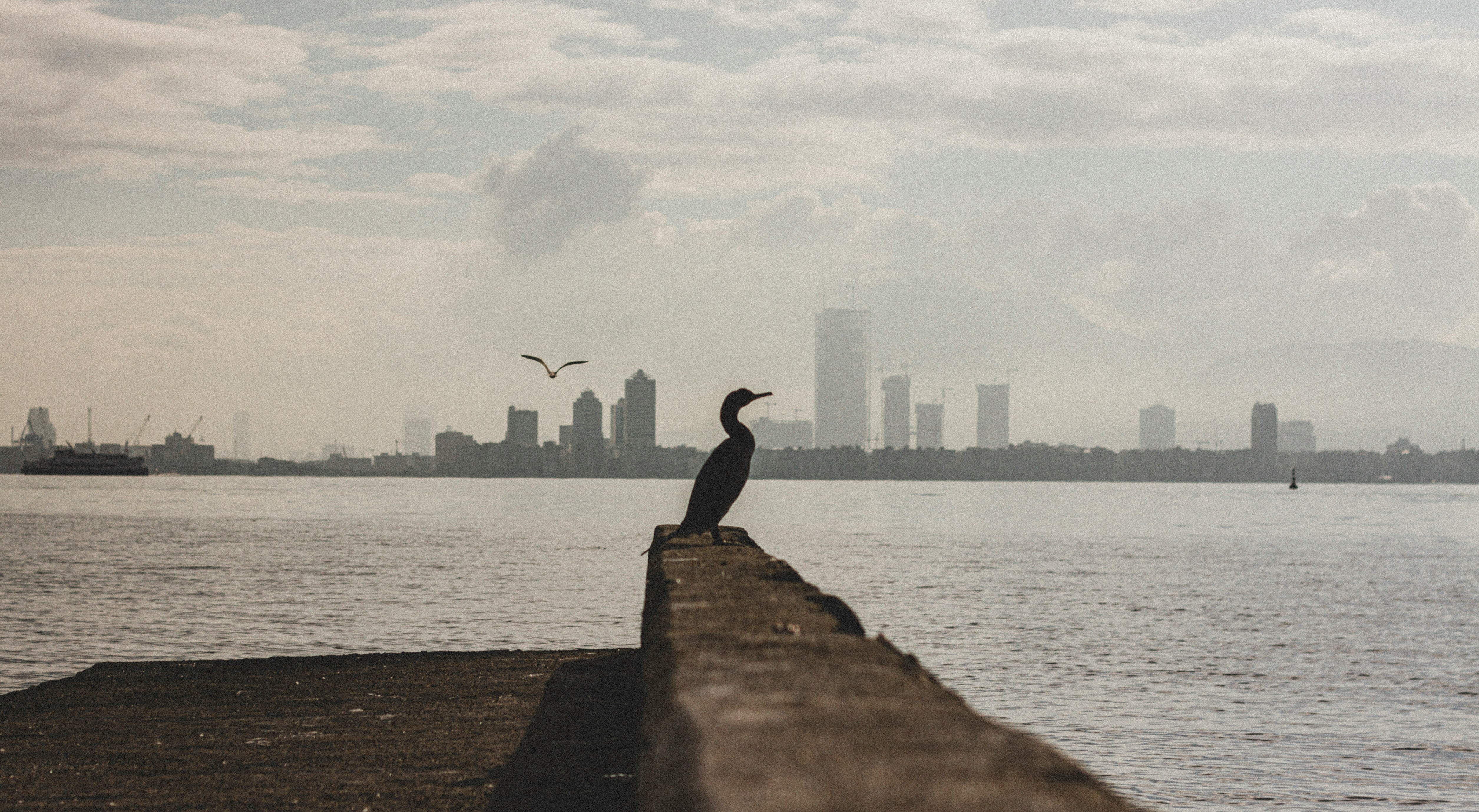
Feature photo by Joshua Ralph on Unsplash


Leave a Reply