
On October 28, 1855, Henry David Thoreau snatched an Eastern Screech-Owl and brought the little bird home with him. The next morning, he set the bird free, but not without a bit of drama.
Here’s Henry’s account of his morning with “his” Owl (Megascops asio).
Thoreau releases the Eastern Screech-Owl
Oct. 29, 1855
Up Assabet.
Carried my owl to the hill again. Had to shake him out of the box, for he did not go of his own accord. (He had learned to alight on his perch, and it was surprising how lightly and noiselessly he would hop upon it. )
There he stood on the grass, at first bewildered, with his horns pricked up and looking toward me. In this strong light the pupils of his eyes suddenly contracted and the iris expanded till they were two great brazen orbs with a centre spot merely.

His attitude expressed astonishment more than anything. I was obliged to toss him up a little that he might feel his wings, and then he flapped away low and heavily to a hickory on the hillside twenty rods off. (I had let him out in the plain just east of the hill. )
Thither I followed and tried to start him again. He was now on the qui vive, yet would not start. He erected his head, showing some neck, narrower than the round head above. His eyes were broad brazen rings around bullets of black. His horns stood quite an inch high, as not before. As I moved around him, he turned his head always toward me, till he looked directly behind himself as he sat crosswise on a bough. He behaved as if bewildered and dazzled, gathering all the light he could and ever straining his great eyes toward you to make out who you are, but not inclining to fly. I had to lift him again with a stick to make him fly, and then he only rose to a higher perch, where at last he seemed to seek the shelter of a thicker cluster of the sere leaves, partly crouching there. He never appeared so much alarmed as surprised and astonished.
When I first saw him yesterday, he sat on the edge of a hollow hemlock stump about three feet high, at the bottom of a large hemlock, amid the darkness of the evergreens that cloudy day. (It threatened to rain every moment. )

At the bottom of the hollow, or eighteen inches beneath him, was a very soft bed of the fine green moss (hypnum) which grows on the bank close by, probably his own bed. It had been recently put there.
When I moved him in his cage he would cling to the perch, though it was in a perpendicular position, one foot above another, suggesting his habit of clinging to and climbing the inside of hollow trees. I do not remember any perpendicular line in his eyes, as in those of the cat.
Credits
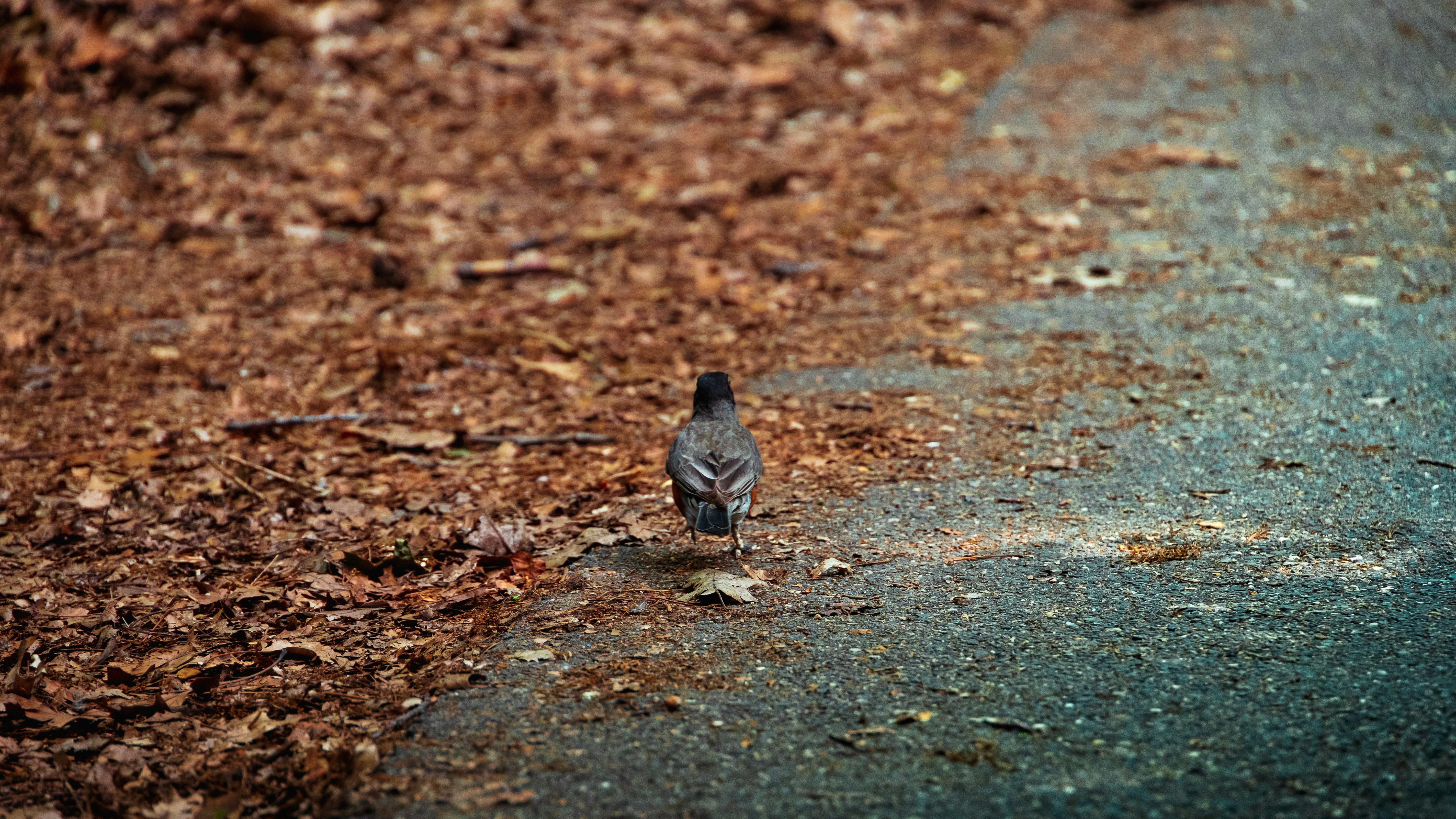
Featured Photo by Jeremy Hynes on Unsplash
Excerpt from Thoreau’s journal from Thoreau’s Bird-lore, edited by Francis H. Allen (1910).


Leave a Reply