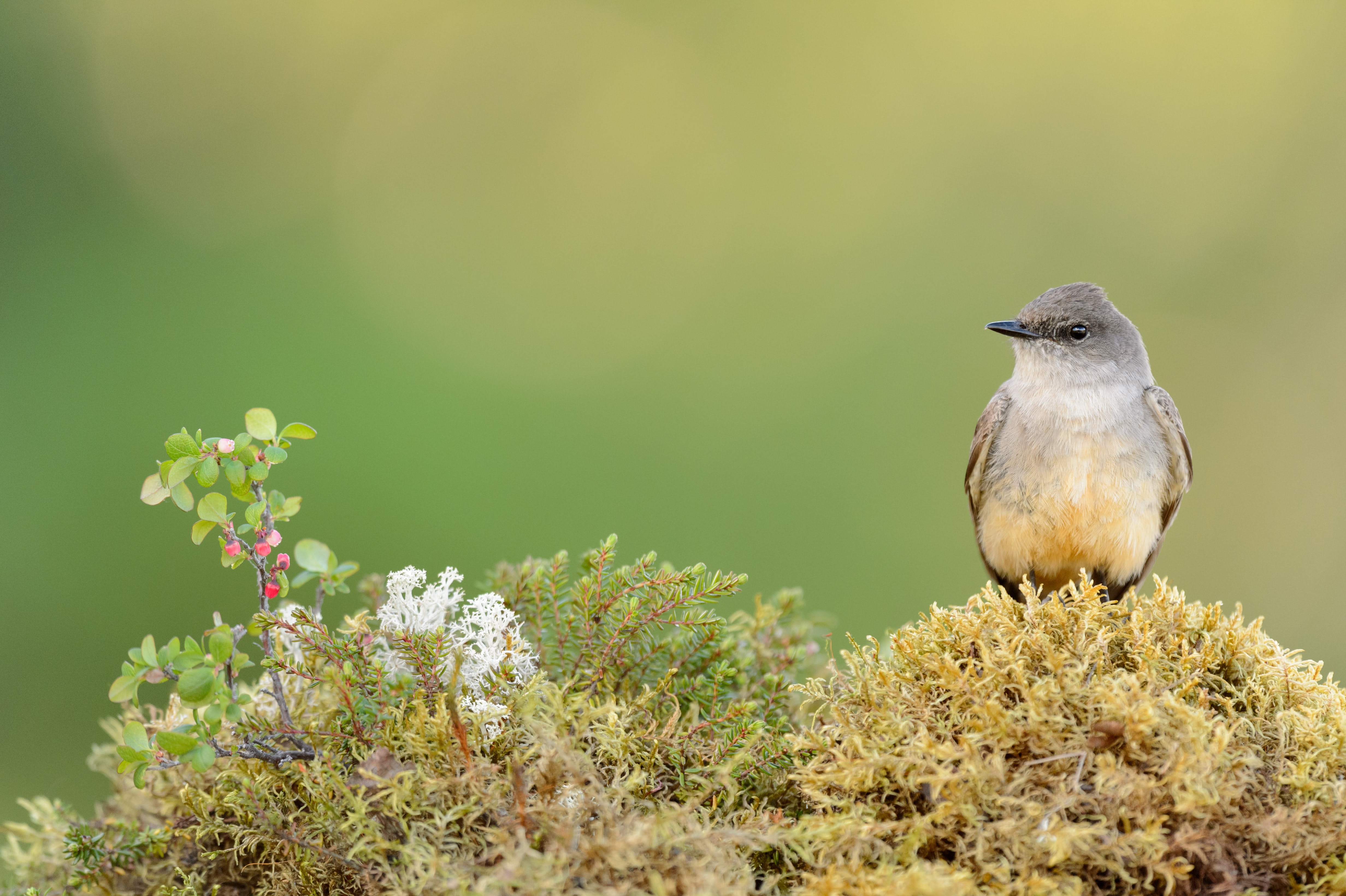
On December 31, 2023, I spotted a Say’s Phoebe at a local shopping center. The species is by no means common around metro Denver in winter. But neither are they especially rare.
Every winter, a few linger — or perhaps a few visit. After all, the species breeds as far north as Alaska, while also nesting as far south as central Mexico. Maybe those northern birds find Denver’s winters plenty mild.
It’s always a treat to encounter flycatchers in the cold months. They disrupt the typical ebb and flow of winter species — sparrows, finches, geese — with their reminder of warmer weather, when flying insects abound.

What’s in a name? The Fate of Say’s Phoebe
Say’s Phoebes are one of 150 or so eponymously named birds that the American Ornithological Society will soon rename. While Say’s name has long been attached to the species, other names — Western Bridge-Pewee, Rocky Mountain Pewee, and Desert Phoebe — hint at the species’ western range and habitat preference.
One Colorado birder suggested the name Sunrise Phoebe has a replacement name. This descriptive captures the sort of glowing, rusty orange of species’ stomach and flanks.
And I think it’s this quality of Say’s Phoebes that makes them such a welcome winter visitors. They warm the world. Or at least they remind us of warmer times.
Phoebes and Built Environments
Not all Say’s Phoebes that visit in the winter stick close to multi-story buildings, but most of those who I encounter in winter do.
In February 2016, I had a Say’s Phoebe high up on an apartment complex adjacent to Denver Botanic Gardens. In February 2017, I had one on top of Sturm Hall at the University of Denver; I watched it from a window on the building’s fourth floor. Most recently 2019, I watched, from a second floor window at the local library, a Say’s Phoebe flycatching off of light fixtures on the 3rd through 5th floors of a nearby apartment building.
Here’s a terrible, distant phot of that 2016 bird.

This year’s winter phoebe was at the shopping center surrounding that library. The bird landed on a first floor ledge, bobbed its tail in that phoebe sort of way, then flew off before I could take a photo or video of it.
I’m not the only one noticing phoebes’ preference for buildings. On January 1, 2018, a large group (CBC’ers, I presume) had a Say’s Phoebe on top of a building at Denver Botanic Gardens. (Checklist here.) A December 2017 Say’s at Denver’s City Park was on top of the science museum. (Checklist with photo here.)
Browsing through eBird photos of the bird in Colorado, with the date filter set to Dec – Feb, reveals many, though certainly not most, of reported phoebes are on human structures and often large ones at that. (Interestingly, Birds of North America describes most overwintering phoebes in Colorado at open streams and sewage ponds.)
Why would this be?
According to one local birder (the state’s expert on birds, bugs, and the interaction among them), the facades of buildings often house dead insects (often in old webs), spiders and their eggs, cluster flies, and midges.
I haven’t had a chance to closely observe the winter phoebes I’ve found. Most of my sightings are of the bird on residential buildings, patios, and windows, at which we can definitely not inspect with binoculars. Other encounters, like the one at the end of this year, are incidental, when I’m doing something other than birding.
But there may be something to phoebes exploiting food sources on buildings themselves. The one’s I’ve seen seem to fly straight up walls or straight at building fixtures and windows, not out and at moving targets in open air. I’ve taken this behavior as the frantic, desperate attempts to stay alive in winter, when food is scarce.
But perhaps it’s more purposeful than it appears. Flycatchers sally and hawk flying insects. But when insects are motionless (that is, dead) and stuck to an old web in a crevice-less corner, an upward, direct flight would be in order.
Featured Photo by Ray Hennessy on Unsplash



Leave a Reply