In 2016, I started conducting a makeshift winter count in a rich area of habitat in Denver’s south suburbs. I cover much of the rather rich riparian corridor of the High Line Canal Trail in Centennial, Greenwood Village, and Cherry Hills Village. Much of this area goes uncounted during Colorado’s Christmas Bird Counts. So to get into the CBC spirit and affirm the existence of local birds — “Look, another pigeon!” — I’ve kept this admittedly idiosyncratic and irregular tradition of holding my own count.
I conducted counts in 2016, 2017, and 2019 – with life intervening in the other years. Most recently, a prolonged period of insomnia wrecked me, and I just didn’t have the energy for an all day count, during which I usually log 30,000 steps.
Happily, my sleep has improved and, with it, my energy. Yesterday, I braved Denver’s cold winter — nearly 70 degrees with full sun — to count birds!
From the hour before sunrise to the hour after sunset, I counted. (Well, to be honest, I guessed at the flocks of geese. And I took a break mid-day, to finish my newly published article for The Conversation about the American Ornithological Society’s decision to change eponymous bird names. You can read it here.)
Measured in species, it was an average day. I logged 38, about par for the course for my counts. Canada Geese numbers were low. Open water was minimal. Duck numbers were low. Montane species and other winter “specialities” were few.
“Good birds,” by which I think most of us usually mean uncommon birds, included a White-throated Sparrow and two Brown Creepers, a (mostly) montane species in Colorado that drops to lower altitudes some winters. (But it’s never very common in my count area.) Good birds, indeed, but not entirely unexpected.

“Good” Birds, Better Encounters
Measured differently, in encounters, the day was unforgettable.
Everywhere, Spotted Towhees, one of my favorite “backyard birds” in Denver. Nearly thirty of these large, bold sparrows foraging in leaf litter, mewing like angry cats.
Everywhere, Raccoon eyes shining in my headlamp, as I searched for owls before sunrise.
A gatherings of American Crows in the local cemetery.

And then the Screech Owls.
It’s Not Easy Being an Owl
Few areas around metro Denver have better habitat for Eastern Screech-Owls than the southern suburbs. Around our creeks and canals are aged and rotted cottonwoods, with room enough for Northern Flickers, European Starlings, Black-capped Chickadees, Red- and White-breasted Nuthatches, endless House Wrens, the occasional Kestrel, and all those Raccoons.
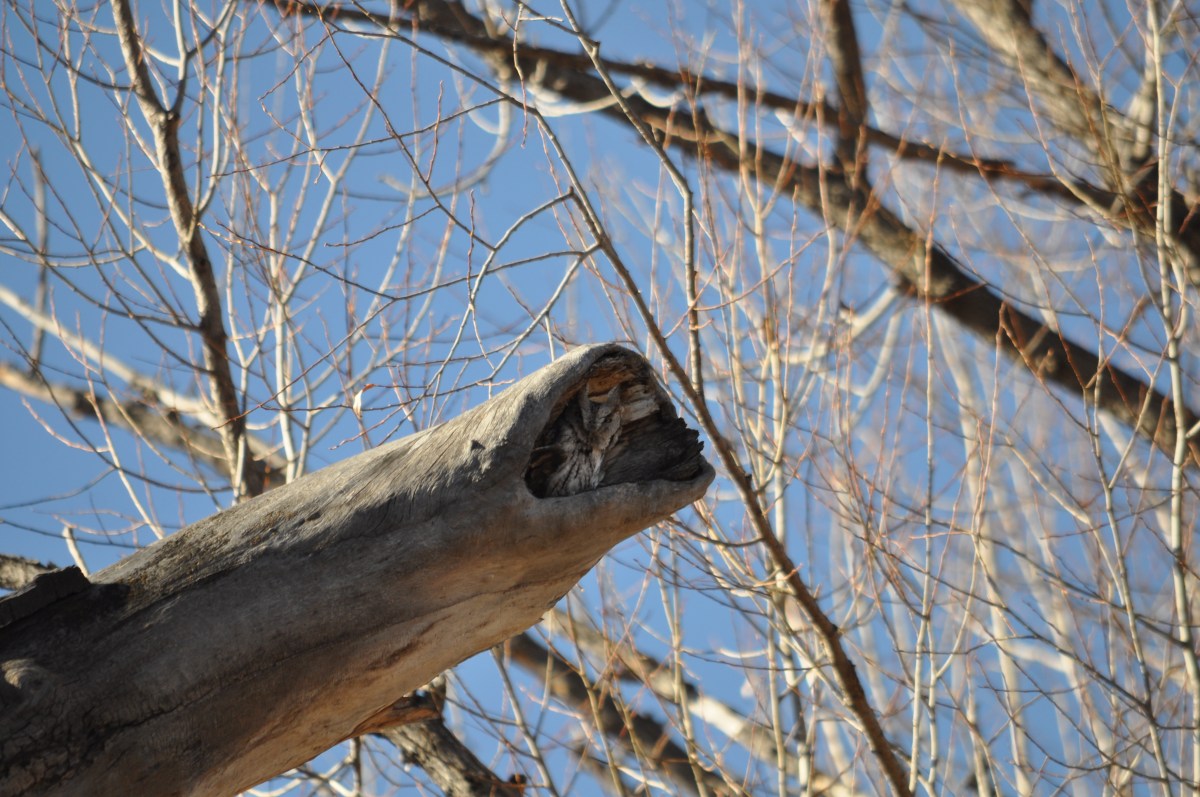
Eastern Screech Owls, too, nest in those cavities. They also roost in them. During Colorado’s cold, but sunny mornings, the owls creep to edge of the cavities and bask.
But it’s not easy being an owl. Songbirds don’t tolerate them, particularly when they join the little birds in the sun. The little birds mob the Screech owls, shouting them back into their holes. The larger birds – magpies, crows, and jays – don’t mind the occasional brouhaha with a Great Horned Owl.
And so when Geoff Stacks, who joined me for a portion of the count, and I noticed a flock of scolding chickadees and nuthatches – the Sentinels of North America’s trees – diving at a splintered cottonwood branch, we knew to look.
At nothing but a splintered branch.
For a chickadee, so much depends on knowing the difference between a cottonwood sheltering a Screech-Owl and a vacant one. A birder can mistake the former for the latter at only the cost of a missed sighting. The chickadee risks much more.
Despite my sense that I was staring at an empty branch and confused chickadees, I waited. And waited some more.
And then the owl, who ambled out of branch to him or herself wait for the sun to light the roost.


The Owls Weren’t Done
That was enough to make a day, but the owls weren’t done. At dusk, I went looking for a Great Horned Owl.
A Eastern Screech Owl found me instead.
Taking an eye-level perch along the High Line Canal Trail in Greenwood Village, the owl first appeared as shadowy gray on the shadowy gray of sunset. But I worked it out—the small bird perched amid a tangle of branches was another Screech-Owl.
The owl kept its perch as I took mine—a downed cottonwood branch (what else?), large enough to sit on.
My lowlight cellphone video shows, with all the clarity of a Bigfoot video, the bird actively scanning the Canal.
The owl eventually left this perch for some other one. So I left mine. But in the distance…that Great Horned Owl.
Species observed
Cackling Goose – 54
Canada Goose – 750
Wood Duck – 3
Gadwall – 1
Mallard – 17
Ring-necked Duck – 1
Rock Pigeon – 45
Eurasian Collared-Dove – 4
Mourning Dove – 2
Ring-billed Gull – 12
Sharp-shinned Hawk – 1
Red-tailed Hawk – 8
Eastern Screech-Owl – 5
Great Horned Owl – 1
Belted Kingfisher – 1
Downy Woodpecker – 1
Northern Flicker – 13
Blue Jay – 7
Black-billed Magpie – 28
American Crow – 38
Black-capped Chickadee – 28
Bushtit – 11
White-breasted Nuthatch – 5
Red-breasted Nuthatch – 7
Brown Creeper – 2
European Starling – 62
Townsend’s Solitaire – 1
American Robin – 69
Cedar Waxwing – 1
House Sparrow – 1
House Finch – 33
American Goldfinch – 2
Dark-eyed Junco – 18
White-crowned Sparrow – 16
White-throated Sparrow – 1
Song Sparrow – 11
Spotted Towhee – 29
Red-winged Blackbird – 111
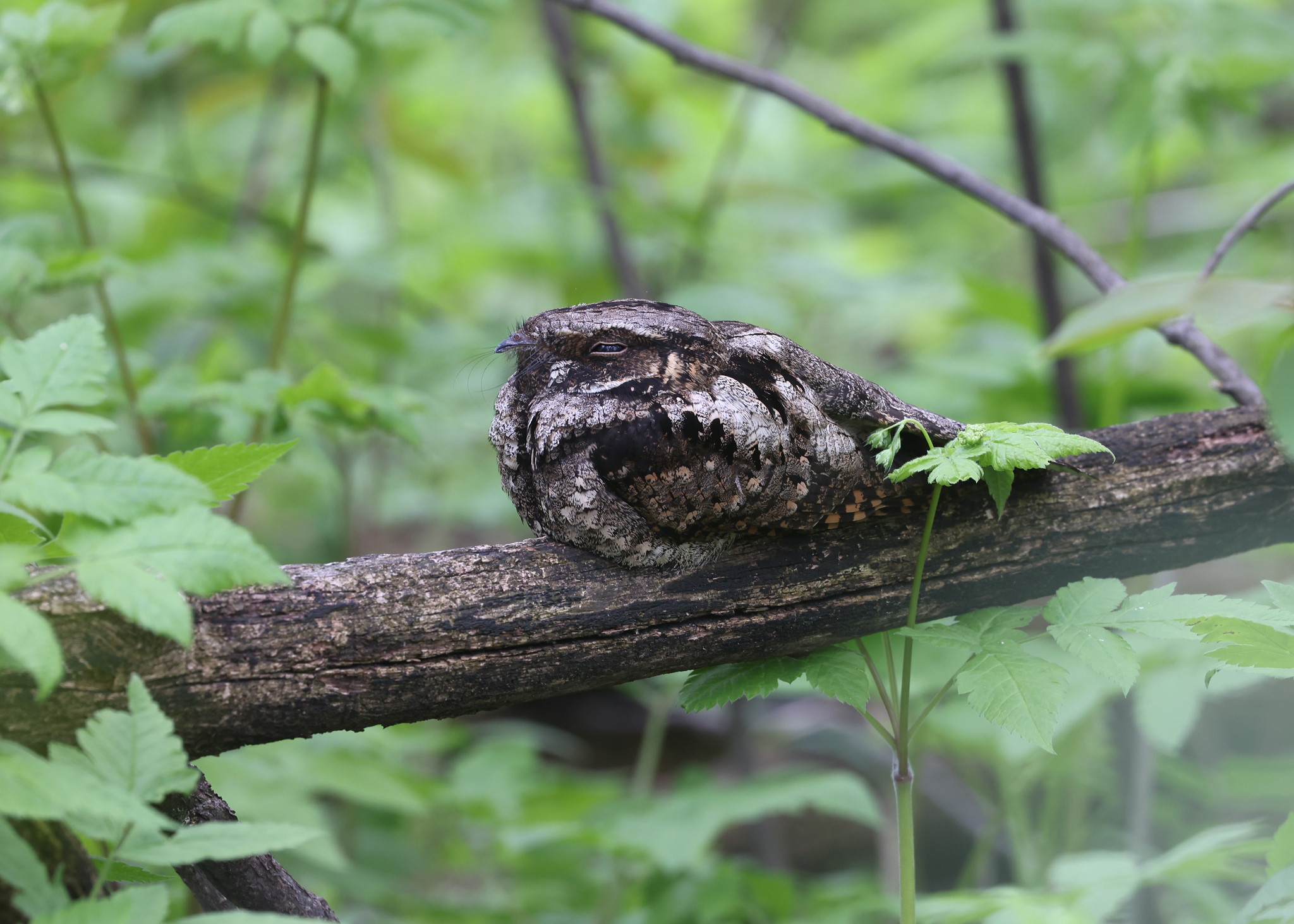
I’m writing a book about Whip-poor-wills in American culture. Sign-up for my newsletter to receive seasonal updates about it, beginning in 2024!


Leave a Reply