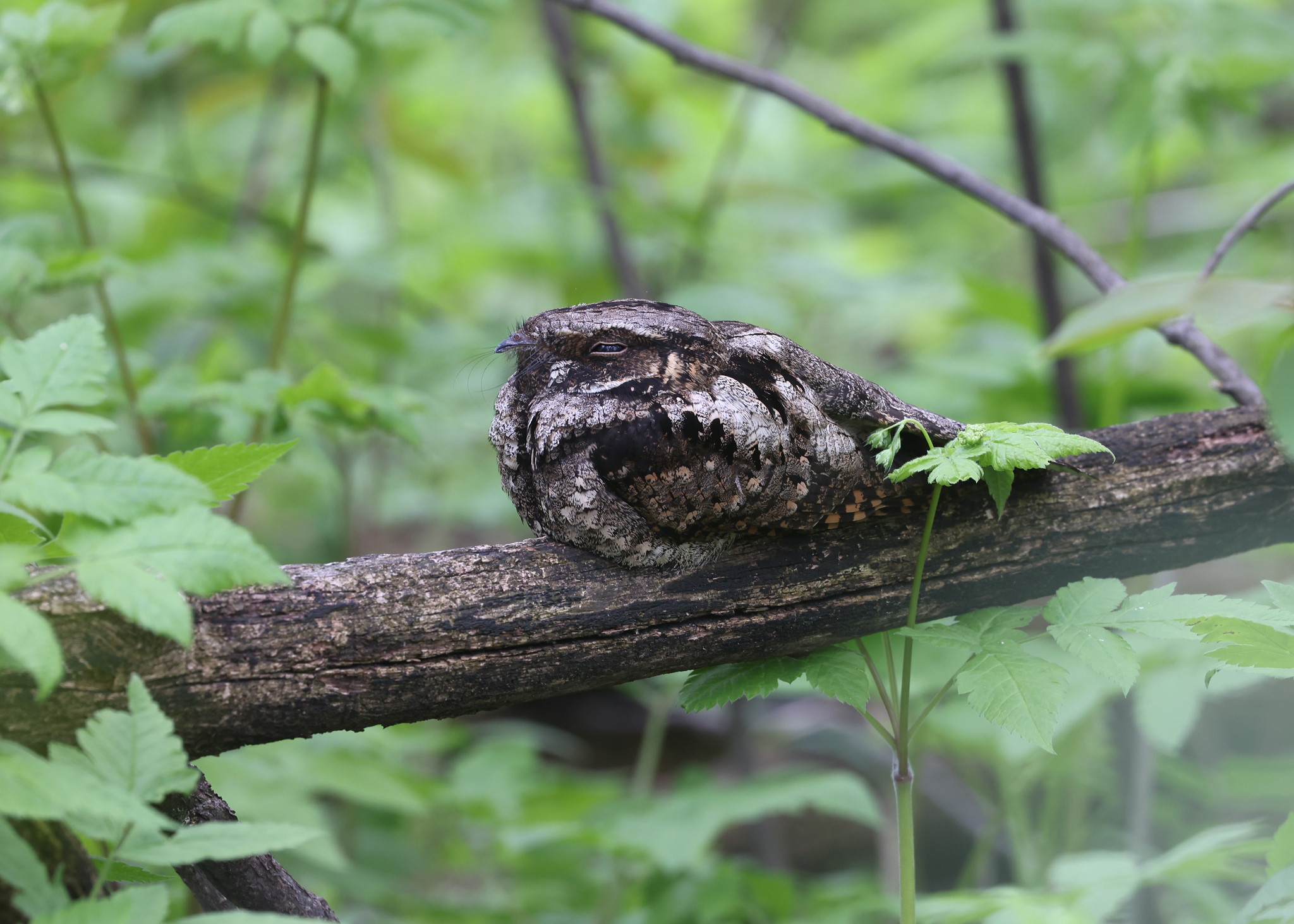
Despite -their relative obscurity today, nightjars and nighthawks (AKA the Goatsuckers) have a rich cultural history in folklore, poetry, literature, and music.
Our naming practices for the bird makes this clear. The Common Nighthawk has been known as “Bugeater” and “Bullbat.” The various “Wills” — the Eastern Whip-poor-will, the Chuck-will’s-widow, and the Common Poor-will — are all named after their songs.
Introducing the Goatsuckers
In a family of oddly named birds, “Goatsucker” may be the most perplexing.
The name a originated in Europe, where people used it for the European Nightjar.

Aristotle is the earliest known source of the name, though his writing suggests the name “Goatsucker” was already popular in his time. In his zoological study, History of Animals, Aristotle wrote this of the goatsucker.
The goatsucker, as it is called, is a mountain bird, larger than the blackbird, and less than the cuckoo. It lays two, or not more than three eggs, and is slothful in its disposition. It flies against the goats and sucks them, whence its name (ægothelas, the goat-sucker). They say that when the udder has been sucked that it gives no more milk, and that the goat becomes blind. This bird is not quick sighted by day, but sees well at night.
Nightjars, of course, don’t suckle goats. They’re insectivores, predominantly feeding on flying insects.
But maybe Nightjars like goats?
But could there be a kernel of truth in this belief? Domestic animals attract insects, which themselves attract insectivores like nightjars. So those anxious shepherds might have been on to something, when in the half light these birds caught them off guard.

I suspect, too, that belief in the nightjar’s goatsucking habits reflects the observer effect: we only see birds in the places where we’re looking. A thousand or two years ago, those who tend goats weren’t likely to spend the hours at dawn or dusk out birding. They didn’t owl, as today’s birders do. They didn’t visit far flung habitats with the specific intent of listing the birds encountered in those habitats. habitats.
Rather, they’d be tending to their goats. So when they saw nightjars, they’d most likely see the birds near their goats.
There’s more to this name than this — like how the name survived the centuries, how it migrated with the Europeans who colonized the western hemisphere, and how this and other folklores about nightjars and nighthawks shapes our understanding of them today.
I’m writing a book about Whip-poor-wills in American culture. Sign-up for my newsletter to receive seasonal updates about it, beginning in 2024!
Featured Photo by Daniel Sandvik on Unsplash


Leave a Reply