|

|
|
|
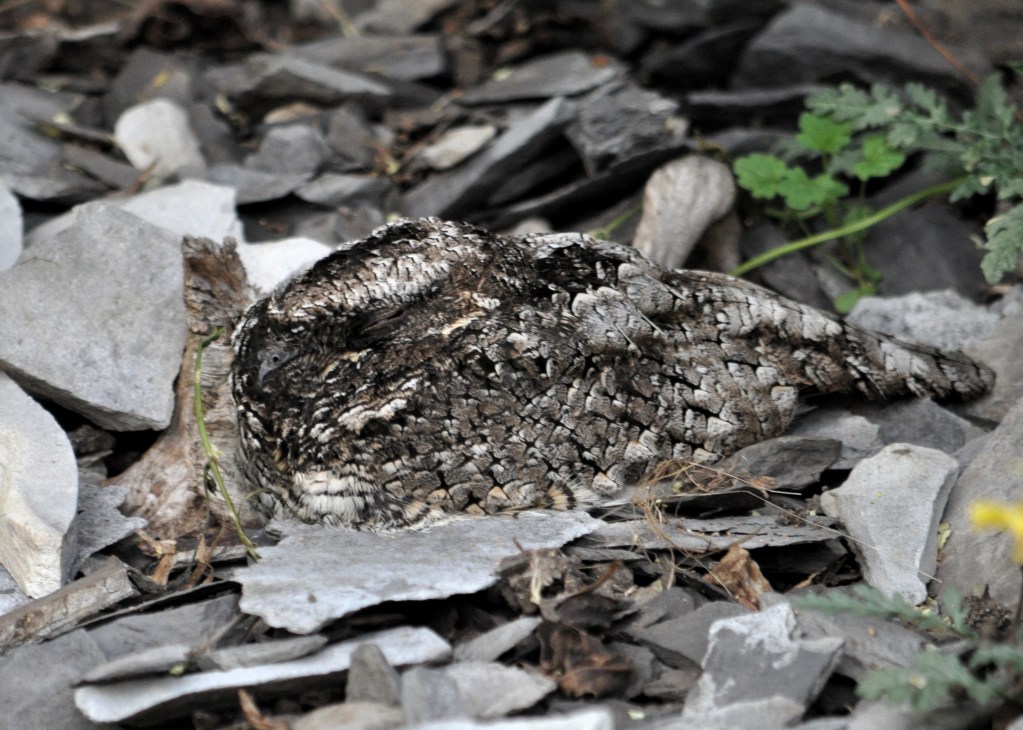
Here in the Denver metro area, Common Poorwills arrive in late April and early May. Some seem to just stop over for a day or two during migration, and it's not unusual to encounter one spending a day in a busy city park. That's how I saw my first poorwill, actually. Having accidentally flushed one from the lilac patch at Denver Botanic Gardens, I followed the bird's path until I found him again (photo below!).
|
This spring, I went out early (early!) on May Day to listen for poorwills in Douglas County, Colorado. One sang under a half-moon until the winds became too much for us both.
|
Though I'm not yet aware of lore or superstition surrounding the song of the year's first Common Poorwill, these are especially rich around Eastern Whip-poor-wills -- who's song ended winter, cured backaches, guaranteed wealth, and predicted the number of years people have to live.
|
As nightjars return to their more northerly breeding ranges, I've had the chance to speak and write about this lore. In late April, I presented this work to Denver Field Ornithologists. That talk was recorded, so if you'd like to stream it, you can do so here.
|
|
Then, a few days ago, Audubon published an essay, "As the Whip-poor-will's Chant Wanes, Our Cultural Losses Grow," I wrote about the changing place of Eastern Whip-poor-wills in the American landscape and culture. Audubon also created a Spotify playlist for the essay, which you can find with the essay. So if you want to listen to songs about Whip-poor-wills as you wait for the song of a Whip-poor-will, check it out!
|
|
|
|
All Nightjars have Superpowers...
and for Whip-poor-wills, I think their superpower is their ability to read the moon. They sing more vigorously and hunt more actively under a full or nearly full moon. There's also evidence they can time both the hatching of their eggs and their subsequent autumn migrations to the moon cycle.
|
|
As for those Common Poorwills, it's their ability to handle both cold and extreme heat. Common Poorwills are the only species of bird known to enter prolonged states of torpor to endure freezing temperatures, similar to the hibernation among mammals. Good thing, too. Here in Colorado, poorwills can't end winter like Whip-poor-wills can in the eastern U.S. Their late April arrivals are always followed by frosts, dustings of snow, and the occasional tree-crushing blizzard. But poorwills are also at home in the extreme heat, having the most efficient a/c systems in the bird kingdom, panting away their body heat to endure southwest U.S. and northern Mexico summers.
|
|
|
|
|
What I'm Reading
|
Looking ahead
Later this month, I'm headed to the Ozarks to spend a full moon with Whip-poor-wills and biologists studying them. Look for a report on that in my summer newsletter.
|
|
|
|
|
|
|
"To sleep where you may hear the whip-poor-will in your dreams!" - Henry David Thoreau, 1851
|
lonesomewhippoorwill.com
jared@lonesomewhippoorwill.com
|
|
|
|
|